Named Exceptions for Hunters Only
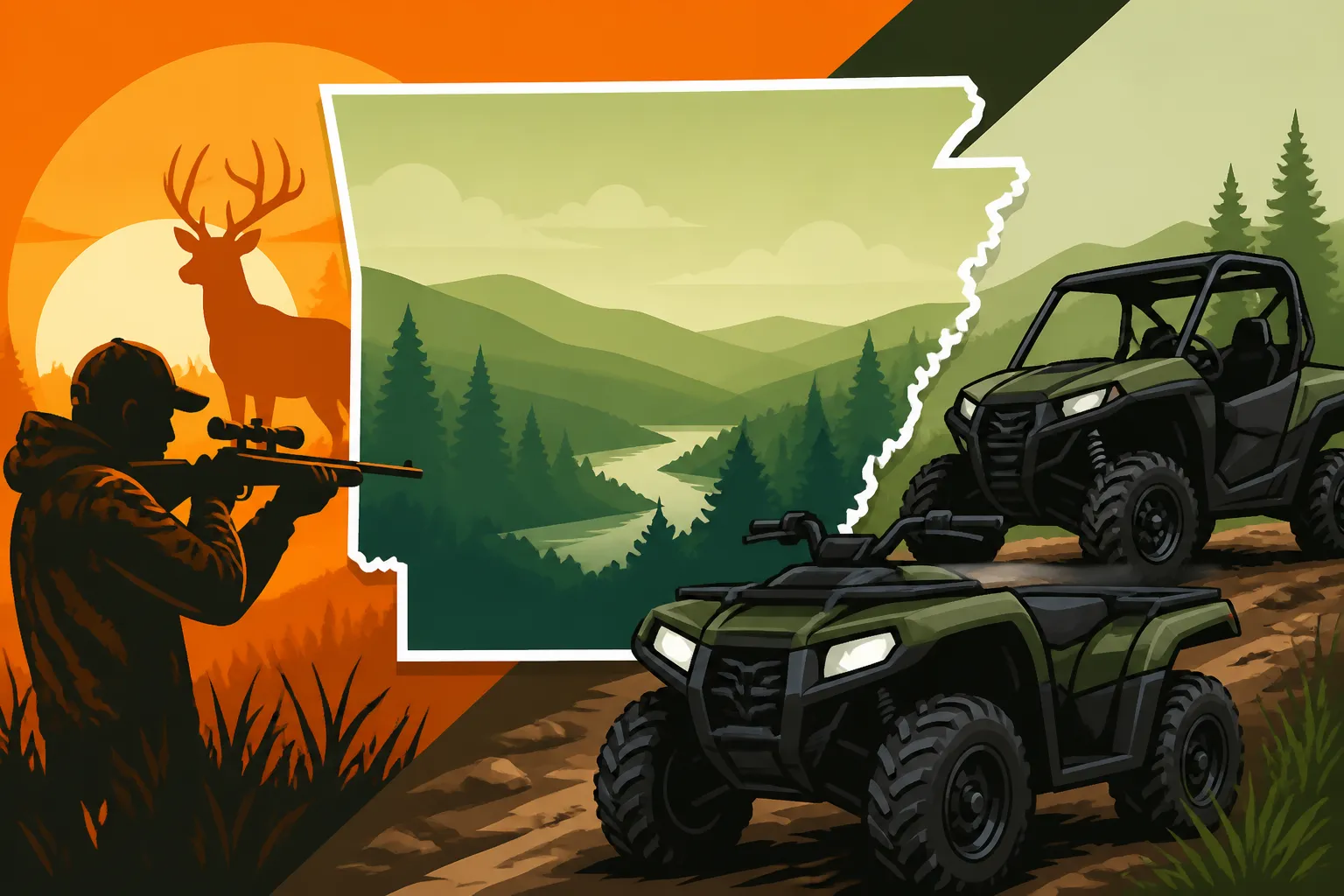
An Arkansas WMA may have a hunter-only exception that allows limited ATV access where ordinary recreational riding is not allowed. The hard part is knowing which area, road, season and purpose qualify. Treat the exception as narrow permission for a specific hunting-related trip—not a general pass to ride behind gates or explore the property.
What a hunter-only exception allows
Arkansas Wildlife Management Areas have rules about where motor vehicles may travel. In general, access depends on the area’s posted rules and whether a road is open to vehicles. A hunter-only exception is a limited allowance for certain hunters in certain places; it does not make an entire WMA open to ATV or UTV riding.
The phrase “hunters only” matters. A recreational ride, sightseeing trip or shortcut across a WMA does not become permitted just because hunting season is underway. The exception is tied to hunting activity and the conditions specified for the particular area. If your trip does not meet those conditions, use only routes open to motor vehicles under the regular rules.
It also does not necessarily mean you can ride anywhere that helps you reach a hunting spot. A permission for specified roads, access routes or travel related to a hunt should not be read as permission to cross a food plot, drive through a closed area, or leave an authorized route to get closer to game. Review Arkansas WMA Vehicle Rules in Plain English for the difference between general vehicle access and special exceptions.
Keep these distinctions in mind:
- The exception is area-specific. A rule for one WMA does not automatically apply to another, even if both are managed for hunting.
- It is purpose-specific. The allowance is for qualifying hunting-related access, not trail recreation.
- It is route-specific. The exception does not necessarily open every road, trail, fire lane or field.
- It may be season-specific. The relevant dates and hunting conditions need to match the current rules for that WMA.
- It does not erase other restrictions. Closures, barriers, signs and rules about vehicle type or route still matter unless the applicable exception clearly says otherwise.
The safest reading is the narrow one: ride only where the current WMA rules expressly allow your machine, for the stated hunting purpose, during the stated period. If a provision is unclear, do not assume it grants broader access. Check the current area regulations with the Arkansas Game and Fish Commission before unloading.
How to check whether your hunt qualifies
Start with the WMA’s current regulations, not a map pin, an old forum post or another rider’s recollection. Rules can differ between areas and can change. Look for the exact name of the WMA, any listed vehicle exception, the route or road it covers, and the conditions attached to it. The list in Arkansas WMAs Named in the Exception List can help you identify the areas to investigate, but confirm the rules that apply to your trip before riding.
Confirm the area and route
First make sure you have identified the correct WMA. Nearby public land can have a different manager or a different set of rules. Then check whether the exception applies to the particular road or access route you plan to use. An exception for one route does not establish access to roads elsewhere on the area.
Pay attention to signs at the entrance and along the route. A map may show a road, but that alone does not establish that motorized travel is allowed. Roads can be closed, gated, seasonally restricted or reserved for certain users. See Arkansas WMA Roads Open to Vehicles and Arkansas WMA Gated and Cabled Barriers for more on those distinctions.
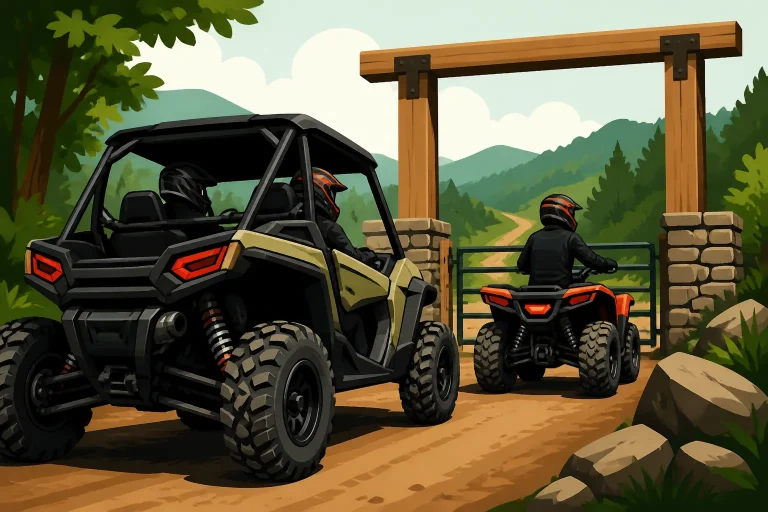
Do not treat a closed gate as a puzzle to solve. A gap around a barrier, a worn tire track or an unlocked gate is not permission to proceed. If a posted sign appears to conflict with what you read, stop and check with the managing agency rather than choosing the interpretation that allows you to ride.
Confirm the hunting conditions
Next, identify what the exception requires of the rider. It may be limited to hunters during a qualifying season or tied to particular hunting-related travel. Do not assume that carrying hunting equipment or having a hunting license is enough by itself. Read the actual conditions and make sure your activity fits them.
The timing matters, too. An exception connected to an open hunting period should not be treated as permission to ride before the season, after it closes, or during a period when the applicable rules do not allow vehicle use. Check the season dates and the WMA’s access rules together. Arkansas Hunters Riding During Open Season explains why “open season” does not necessarily mean every road is open to every machine.
Also consider whether the exception is for travel to and from a hunting location, use of a designated route, or another limited purpose. Do not extend the permission to a recreational loop after the hunt or to a passenger’s sightseeing ride. When a rule describes a narrow activity, keep your riding within that activity.
Check machine limits and area-specific restrictions
Do not assume that every ATV, side-by-side or other off-highway machine qualifies. The WMA rules may limit the type of vehicle or the roads it can use. Read the relevant language for your machine rather than relying on the broad label “ATV.” A side-by-side may be subject to different practical limits than a narrow quad, and route width or barriers can prevent access even where some vehicles are allowed.
Other area restrictions can remain in force alongside a hunting exception. For example, a permission to travel on a specified access road would not automatically allow riding across a food plot or using a closed fire lane. The distinctions are covered in Arkansas WMA Food Plots and Fire Lanes. If the rule does not clearly allow a particular route or surface, ask before using it.
A hunting exception is not a permit to ride anywhere
A common source of confusion is the difference between an exception to a WMA vehicle restriction and a permit for a trail or forest. These are separate questions.
A WMA exception concerns access under the rules for that wildlife area. A forest OHV permit, where one is required, applies to the designated forest riding system or land covered by that permit. Buying a permit does not open a WMA road that is otherwise closed, and having a WMA hunting exception does not replace a forest permit for a different riding area. The permit systems are separate, as explained in Arkansas OHV Permits: Two Forests, Two Prices.
Likewise, an Arkansas registration decal and an area access permit are not interchangeable. Registration may be a legal requirement for the machine, but it does not grant permission to ride on a particular WMA route. An area permit or hunting exception addresses access; it does not necessarily settle whether the machine must be registered or whether other equipment rules apply. Review Arkansas WMA Access for a Quad and Arkansas Proof of Ownership on the Trail if you need to sort out the difference between land access and documents for your machine.
Use this table to keep the questions separate:
| Question | What to verify | What it does not establish |
|---|---|---|
| Does the hunting exception apply? | The WMA, route, hunting purpose and dates covered by the current rule | Permission to ride anywhere else on the WMA |
| Is the road open to vehicles? | Current area rules, signs, barriers and closures | That an exception for another road applies |
| Is your machine allowed? | Vehicle type, route limits and any width or access restrictions | That a route is open to every off-highway vehicle |
| Do you need an OHV permit? | The rules for the specific forest, trail system or riding area | WMA access where the WMA rules prohibit it |
| Is the machine properly documented? | Applicable registration and proof-of-ownership requirements | Permission to ride on closed land |
That distinction is useful when planning a trip that combines a hunt with trail riding. A hunting exception should not be used as a way to link separate riding areas or to turn public-land access into an informal trail route. If you plan to ride a designated OHV system after hunting, check that system’s own rules and permits before you go.
A practical check before unloading
A short check before the trip can prevent a long detour—or a violation. Do not rely on a single source if the details are unclear. Compare the current WMA regulations with posted information at the access point, and contact the managing agency when the wording does not settle your question.
Use this sequence:
- Name the exact WMA. Confirm that the land you intend to enter is the area covered by the hunter-only exception.
- Read the current exception. Note the stated purpose, dates, routes and vehicle limits. Do not infer additional permission from a short summary.
- Map the route. Identify the access road you intend to use and confirm it is included. A road shown on a map is not necessarily open to vehicles.
- Check for closures and signs. Follow gates, posted restrictions and temporary closures. If the posted direction is unclear, stop and ask.
- Confirm the trip is hunting-related. Make sure your planned use fits the exception rather than adding a recreational ride or detour.
- Check the machine and paperwork separately. Verify any registration, proof-of-ownership or area-permit requirements that apply to the machine or land.
- Carry the information you may need. Keep your hunting documents and relevant machine paperwork available, and save the current area rules so you can refer to them if questions arise.
A few examples show how the limits work:
- You are hunting in a WMA named in an exception and using a route expressly covered by that rule. The exception may apply, provided your trip also meets its season, purpose and machine conditions.
- You are hunting in a WMA that is not included in the exception list. Do not assume the same allowance applies. Follow the ordinary vehicle-access rules for that area.
- You are in a named WMA but want to ride a road not covered by the exception. The WMA’s name alone does not open that road. Check whether it is independently open to vehicles.
- You finished hunting and want to continue riding for recreation. The hunting purpose no longer describes the additional ride. Use only routes where recreational vehicle access is permitted.
- You see tracks past a barrier. Tracks do not show that the route is authorized. Respect the barrier and confirm access before proceeding.
If a ranger or wildlife officer asks about your use, be ready to explain where you are, what route you are on and how your trip fits the exception. Carrying relevant paperwork can help establish facts, but paperwork cannot make a closed route lawful. The same principle applies to a decal, a hunting license or an OHV permit: each document has a specific purpose.
When there is no clear answer, the conservative choice is to park and ask. A narrow exception is not a good basis for guessing about access, especially where wildlife management, hunting seasons and road closures overlap. Confirm the rule for the exact WMA and route before you ride, and stay within the permission it actually grants.
Disclaimer
This article is for general informational purposes only and does not constitute professional advice. Laws, prices and regulations vary by location and change over time. Consult a qualified professional for guidance on your specific situation.