Spark Arrestors on the Ouachita
A spark arrestor is not an optional trail accessory in the Ouachita National Forest: federal rules require one on off-highway vehicles with internal combustion engines. The tricky part is knowing whether your exhaust setup counts, especially if it has been changed or repaired. Here’s how to check your machine, avoid common equipment mistakes, and keep the forest’s separate access rules in view.
Spark arrestors are required in the Ouachita National Forest
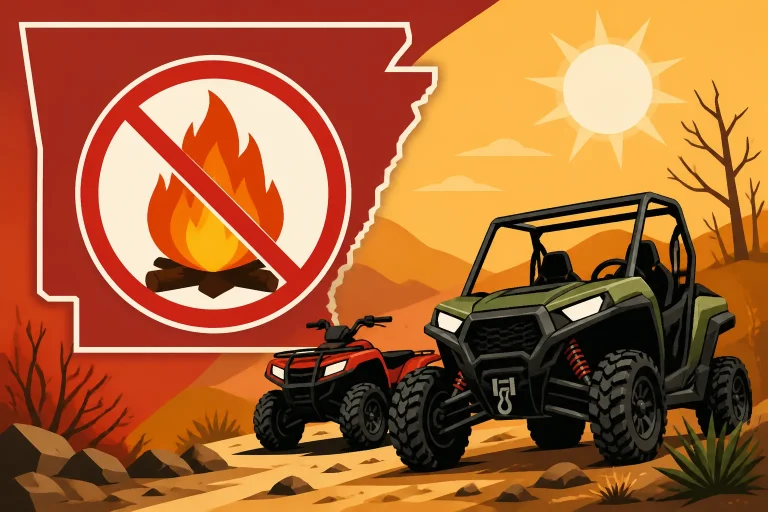
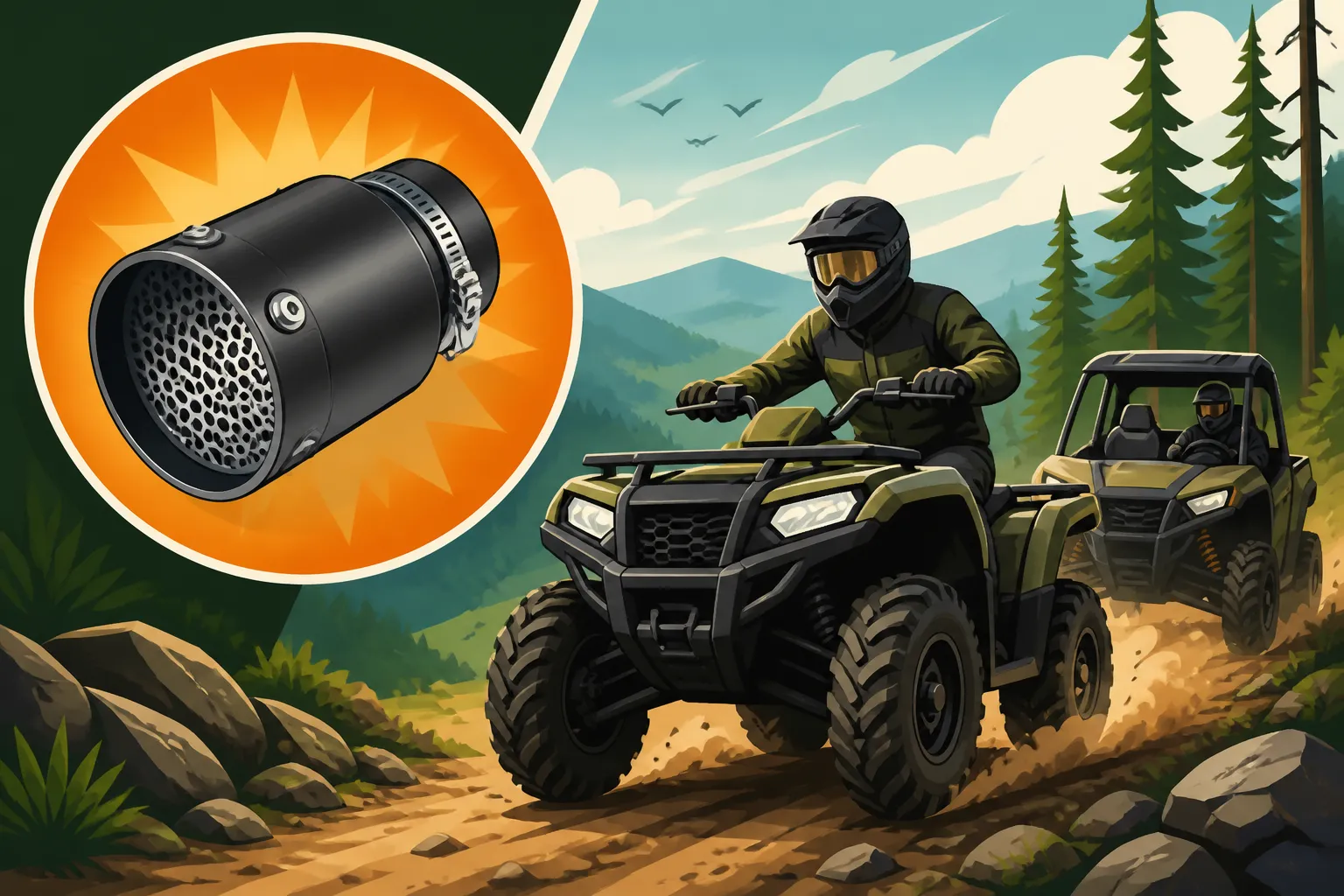
A spark arrestor is a device in an exhaust system that helps prevent sparks from escaping. On forest trails, it is a fire-prevention measure as well as an equipment requirement. A muffler alone does not necessarily mean a machine has a spark arrestor; check the equipment and exhaust configuration rather than assuming one substitutes for the other.
The USDA Forest Service states that internal combustion engines on off-highway vehicles operating in the National Forest System must have a properly installed and maintained spark arrester. That federal rule applies to riding in the Ouachita National Forest. The Forest Service also states that a spark arrestor is legally required for ATV operation in the Ozark-St. Francis National Forests. For additional context on where these rules apply, see Arkansas National Forest Riding Explained.
The important words are “properly installed and maintained.” Having a component that was once part of the exhaust system is not enough if it has been removed, altered, damaged or installed incorrectly. If you do not know whether your current setup meets the requirement, check the machine’s owner’s manual and ask the manufacturer or a qualified service provider before riding. Do not treat a visual guess as confirmation.
Arkansas law also prohibits operating an ATV with a modified exhaust or with a removed or modified spark arrester, according to the Arkansas State Legislature. Some public wildlife management areas enforce strict “Factory Exhaust Only” rules as well. That means an aftermarket exhaust can create a problem beyond whether it seems quiet or appears to control sparks. If you ride different kinds of public land, confirm the rules for each destination instead of assuming a setup accepted in one place will be allowed everywhere.
| What to check | Why it matters | Practical next step |
|---|---|---|
| Whether the machine has a spark arrestor | The USDA Forest Service requires one on off-highway vehicles with internal combustion engines in the National Forest System | Check the owner’s manual and confirm the installed exhaust configuration |
| Whether the arrestor is installed and maintained | A missing, altered or damaged component may not meet the requirement | Have uncertain equipment inspected before riding |
| Whether the exhaust has been modified | Arkansas law prohibits operating an ATV with a modified exhaust or removed or modified spark arrester | Restore an approved, compliant setup and verify local land rules |
| Whether the riding area has extra restrictions | Wildlife management areas may enforce “Factory Exhaust Only” rules | Check the land manager’s current requirements for the specific area |
A spark arrestor requirement is easy to overlook when you are focused on route planning, fuel, tires and weather. Add it to your pre-ride equipment check. If the exhaust has been changed by a previous owner, do not assume the work preserved the required equipment. If you are buying a used machine, ask what was changed and inspect the exhaust before making the trip.
For a broader checklist of trail requirements, What a Forest Ranger Checks on an Arkansas Trailhead can help you think beyond the exhaust system. The machine may meet the spark-arrestor rule while still being subject to other equipment, route or land-access restrictions.
How to check your exhaust setup before riding
Start with the machine’s documentation. The owner’s manual or manufacturer information may identify the exhaust components and explain how the spark-arresting equipment is configured. If the manual is missing or the exhaust has been replaced, contact the manufacturer or a service provider familiar with the machine. Give them the make and model and describe any changes you know about. The goal is to confirm that the equipment is present, appropriate for the machine and installed as intended.
Do not rely on a seller’s phrase such as “trail legal,” “forest ready” or “stock-style” by itself. Those descriptions may not answer whether a spark arrestor is installed and maintained, or whether the machine complies with the rules for the particular area. Likewise, a quiet exhaust is not proof that a spark arrestor is present. Sound level and spark control are different questions.
If you are considering a replacement part, compare its fit and specifications with the machine’s manufacturer information. A listing or package description should give enough detail to establish compatibility, but unclear wording is a reason to ask the seller or manufacturer for clarification, not a reason to guess. If you shop through Amazon, treat the listing as a starting point and confirm compatibility and compliance with the manufacturer or a qualified service provider before installing the part.
Avoid removing or altering exhaust equipment to change sound or performance. Arkansas law prohibits operating an ATV with a modified exhaust or a removed or modified spark arrester, according to the Arkansas State Legislature. A change that seems minor in a garage can affect whether the machine is allowed on public land. If an exhaust has already been modified, ask a qualified service provider what needs to be restored and verify the requirements of your destination before riding.
A useful check before departure is to:
- Identify the machine’s current exhaust setup, including any aftermarket parts or repairs.
- Confirm from reliable machine-specific information that the spark arrestor is present and properly installed.
- Check that it is maintained and not removed, damaged or modified.
- Ask for professional confirmation if the setup is unfamiliar or the documentation is unclear.
- Verify whether the riding area has an additional exhaust rule, such as a “Factory Exhaust Only” requirement.
Keep any relevant manual or part information with your riding paperwork, especially if the setup is not visibly original. It can help you answer questions about the machine, but it does not replace compliance. Forest and other land managers set and enforce rules for their own areas; the final check is whether your equipment meets the requirements where you plan to ride.
Check access rules as well as equipment
A compliant spark arrestor does not automatically grant access to every trail or public area. National forests, state-managed wildlife areas and other public lands can have different managers and different requirements. Before you tow, identify the land manager for the exact trail system and check current access information. Arkansas ATV Trails: Where to Ride offers a starting point for planning, but always confirm conditions and restrictions for your chosen destination.
The USDA Forest Service says designated motorized trails in the Ouachita National Forest, including the Wolf Pen Gap Trail Complex, are typically open from the first Friday of March through October 31, with specific holiday periods from three days before Thanksgiving through two days after, and from December 22 through January 2. These are typical seasonal dates, not a reason to skip a current trail-status check. Closures or conditions can affect a planned ride, so check the Forest Service’s information before setting out. Arkansas Trail Conditions Before You Tow is also relevant when you are planning around access and trail status.
Permit requirements are separate from the spark-arrestor rule. The USDA Forest Service says non-residents generally do not need separate Arkansas OHV registration or a state trail permit to operate on federal public lands such as Arkansas national forests, provided they stay on designated routes. However, rules and entry permits can vary with the agency managing a particular area. Some Ozark-St. Francis National Forest trail systems, including Mill Creek and Moccasin Gap, require a day-use fee or permit, according to the USDA Forest Service. Consult Arkansas OHV Permits: Two Forests, Two Prices and Arkansas Rules for an Out-of-State UTV when planning a visit, and confirm the current requirements for the site itself.
Keep the land boundary in mind. The National Park Service oversees regulations within the Buffalo National River, so a forest rule should not be assumed to apply there. If your route crosses or approaches land managed by another agency, check that agency’s rules separately. Arkansas Permits Bought on Recreation.gov may help with forest permit planning, but it does not replace checking whether a specific trail system requires a permit or fee.
Also, trail permission is not permission to ride public roads. The Arkansas General Assembly says ATV operation on public streets and highways is generally unlawful, apart from specific exceptions such as farming, hunting or direct road crossings. Arkansas law does not permit general ATV operation on paved state highways. Plan your transport route so that reaching a trailhead does not depend on riding a machine along a road where it is not allowed.
For a UTV or side-by-side, the State of Arkansas Department of Finance and Administration defines the vehicle as 80 inches or less in width. That definition may matter when identifying the type of machine you have, but it does not override a trail’s specific access limits. Check the route’s machine requirements and any applicable gate restrictions before leaving home. Arkansas ATV Trails That Allow Side-by-Sides can help focus that research.
A practical pre-ride checklist
Use a short, repeatable check before each trip, especially if the machine has changed hands or received exhaust work since the previous ride.
- Confirm the land manager. Identify whether the route is in the Ouachita National Forest, another national forest, a wildlife management area, a national park unit or other managed land.
- Check the spark arrestor. Confirm it is installed, maintained and not removed or modified. If you are unsure, get machine-specific advice before riding.
- Review exhaust restrictions. Check for rules beyond the general forest requirement, including any “Factory Exhaust Only” restriction.
- Confirm route access. Make sure the trail is designated for motorized riding and is open under current conditions.
- Check permit and entry requirements. Do not assume that a general forest rule covers a trail-specific fee, permit or a different agency’s access conditions.
- Keep road travel separate. Use a suitable transport vehicle to get to the trailhead unless a specific legal exception applies to the road use you have in mind.
If you find a problem with the exhaust at the trailhead, do not ride and hope it will go unnoticed. The safer choice is to correct the issue and confirm that the machine complies before entering the trail system. That avoids a preventable violation and reduces the chance that equipment trouble disrupts the outing.
The core rule is straightforward: a spark arrestor must be properly installed and maintained on an off-highway vehicle with an internal combustion engine in the National Forest System. The harder part is confirming that a changed or unfamiliar exhaust still meets the requirement and checking whether the specific riding area has additional rules. A little verification before departure can prevent confusion on the trail.
Sources
- USDA Forest Service — Wolf Pen Gap – Ouachita National Forest (checked November 2, 2026)
- State of Arkansas Department of Finance and Administration — State of Arkansas Department of Finance and Administration Fiscal Impact Statement HB1606 (checked November 2, 2026)
- National Park Service — Buffalo National River (checked November 2, 2026)
Disclaimer
This article is for general informational purposes only and does not constitute professional advice. Laws, prices and regulations vary by location and change over time. Consult a qualified professional for guidance on your specific situation.