Riding on a Parent’s Leased Land
It’s a common scenario across Arkansas: your parent has managed to secure a fantastic lease on some prime acreage, and naturally, your thoughts turn to taking your ATV or side-by-side out there. But before you load up the trailer, you might be scratching your head, wondering if simply having a parent lease the land means you or your kids can just ride freely. The truth is, riding on land your parent leases isn't quite the same as riding on land they own, and there are some crucial distinctions and permissions you need to understand to stay legal, safe, and respectful of everyone involved. This guide will walk you through the essential considerations, from legalities to practical tips, ensuring your family's off-road adventures are both fun and above board.
Understanding the Nuances of Leased Land in Arkansas
The biggest hurdle for many families is simply understanding that "leased land" carries a different set of rules and permissions than land that is directly owned. When your parent leases land, they are essentially renting the right to use that property for specific purposes outlined in the lease agreement. They don't own the dirt, the trees, or the full spectrum of rights that come with outright ownership. This distinction is absolutely critical when it comes to allowing others, especially children, to ride ATVs or UTVs on that property.
Defining Leased Land and Who Holds the Authority
Think of leased land as a temporary arrangement where the landowner (the lessor) grants certain privileges to the person leasing the property (the lessee, your parent). The lease agreement itself is the foundational document that dictates what activities are allowed. Most leases, especially for hunting or agricultural purposes, are very specific about what can and cannot be done. They might allow a hunting camp, farming operations, or timber harvesting, but they often don't explicitly grant permission for recreational ATV riding by the lessee's entire family, let alone their children.
The ultimate authority over the land remains with the actual landowner. Your parent's rights are bounded by the lease terms. This means that while your parent might give you verbal permission, it’s not legally binding in the same way as if they owned the property outright. Without the landowner's explicit consent, often in writing, you could inadvertently put your parent in breach of their lease agreement, or worse, be considered trespassing by the actual owner, even if your parent told you it was okay. This is why having a clear understanding of [Riding on Land You Do Not Own] is so vital, and it starts with figuring out who truly calls the shots.
Clarifying Permissions Beyond the Lease
Because the landowner holds the ultimate authority, any permission for activities not explicitly detailed in the lease — like recreational ATV riding — must come directly from them. Your parent, as the lessee, cannot grant rights they don't possess. Imagine your parent leases a cabin; they can let you stay there, but they can't let you tear down a wall without the owner's permission. The same principle applies to ATV riding.
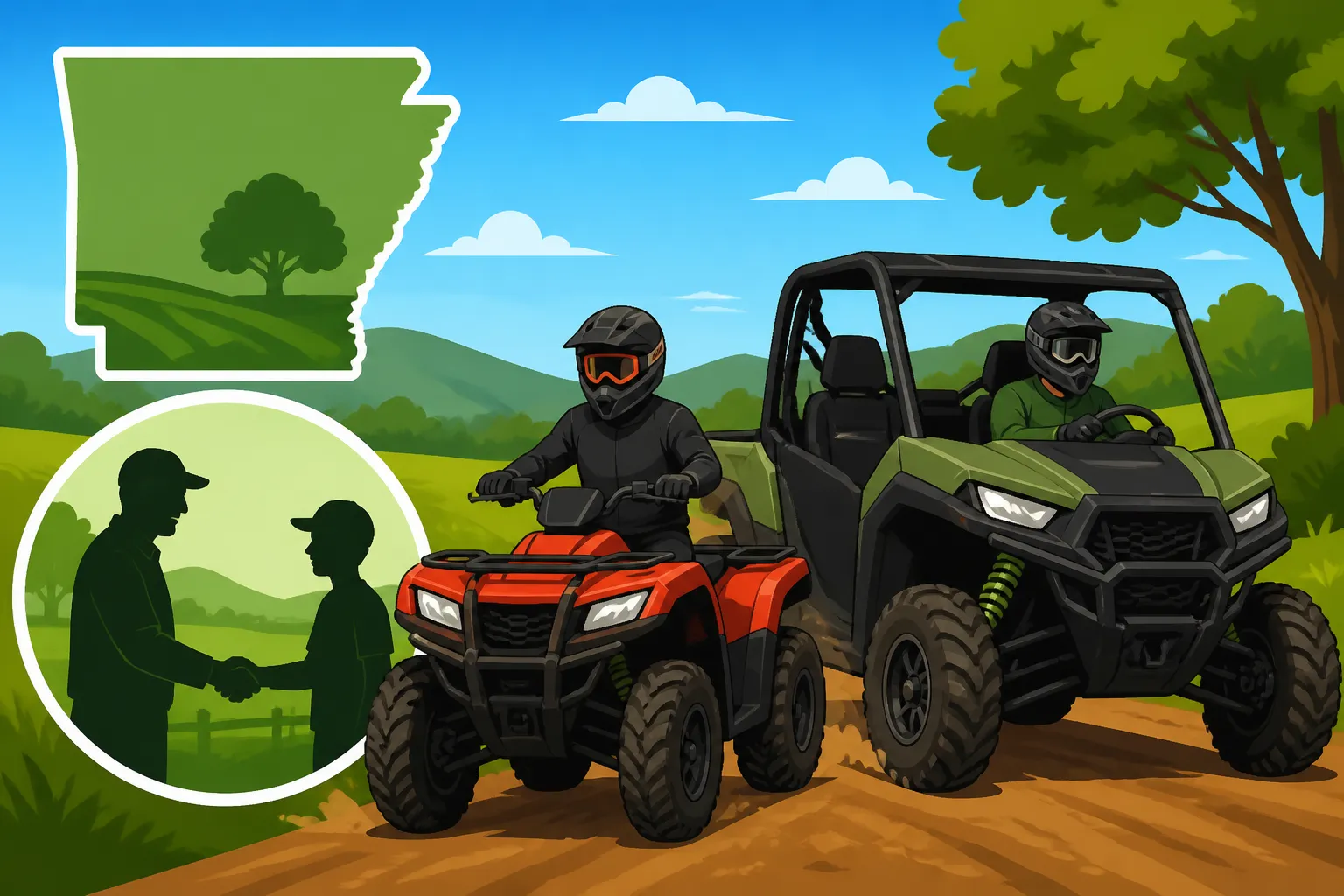
You'll need to have an open and honest conversation with the landowner, or ensure your parent does. Explain clearly who will be riding, what types of machines (e.g., [Arkansas's 50-Inch, 1,000cc ATV Definition]), and when. It’s important to respect their property and their wishes. Often, landowners are amenable, especially if they trust your parent, but it’s a conversation that absolutely must happen. Don't assume anything, because assumptions can lead to uncomfortable situations or even legal issues down the road. Obtaining proper permission is the bedrock of responsible riding, even more so when dealing with property that isn't directly in your family's name.
Arkansas's Rules for Riders Under Twelve on Private or Leased Land
Even with all the necessary permissions secured from the landowner, Arkansas has specific statutes regarding young riders that apply whether the land is owned, leased, or otherwise. These rules are in place for the safety of children, and it’s important for parents and guardians to understand and abide by them. You can't just hand a young child the keys and wave them off, even on what feels like "your" private property.
Direct Supervision Requirements for Young Riders
Arkansas law is quite clear when it comes to children operating ATVs. For any rider under the age of 12, direct adult supervision is a must. This isn't just a suggestion; it's a legal requirement. "Direct supervision" means that an adult who is at least 18 years old must be within visual and audible range of the child at all times while the child is operating the ATV. They need to be close enough to intervene immediately if there's a problem, to offer guidance, or to prevent an accident. This might mean riding alongside them on another machine, or walking/jogging nearby.
This rule doesn't magically disappear just because you're on leased land. The law applies to the operation of the machine, regardless of property ownership. So, if your nine-year-old is itching to ride that new quad on your parent's leased deer lease, a responsible adult needs to be right there with them, every step of the way. This is a common point of confusion, and understanding [Arkansas Rules for Riders Under Twelve] is crucial for any family venturing out.
Age Restrictions and Machine Size for Minors
While the direct supervision rule primarily covers those under 12, it's also important to consider the capabilities of the child and the machine itself. Arkansas doesn't have a specific statute dictating engine size by age for private land, but common sense and manufacturer recommendations are paramount. Most ATV manufacturers provide age guidelines for their machines, suggesting appropriate engine sizes for different age groups. These guidelines are based on safety research and rider development.
Putting a small child on an ATV that's too large, too powerful, or too heavy for them to control safely is an accident waiting to happen. Even if they have an adult right there, an overpowered machine can quickly get away from a novice rider. Parents should always assess their child's skill level, maturity, and physical ability against the machine they intend to ride. Starting with smaller, youth-specific models and gradually progressing as skills develop is the safest approach. Remember, a machine like those from SuperATV, while robust and capable, still needs to be matched appropriately to the rider's experience and size for optimal safety.
Navigating Liability and Permission on Leased Property
This is where things can get a bit sticky, and it's perhaps the most important area to understand fully before anyone starts riding on leased land. Liability is a serious consideration, and making sure everyone is properly protected and informed is non-negotiable.
The Importance of Written Permission from the Landowner
We touched on it earlier, but it truly bears repeating: verbal permission is just not enough when it comes to riding on someone else's property, even if that "someone else" is your parent's lessor. You need [Written Permission From an Arkansas Landowner]. This document should clearly state:
- Who is granting permission: The landowner's full name and contact information.
- Who is receiving permission: The names of all riders, especially minors, and the supervising adults.
- What machines are allowed: Make, model, and VINs if possible, or a general description like "all-terrain vehicles (ATVs) and utility task vehicles (UTVs)."
- Where riding is permitted: Specific boundaries, trails, or areas on the property.
- When riding is permitted: Dates, times, or duration of the permission (e.g., "during the term of the lease," or "from X date to Y date").
- Any specific conditions or restrictions: For example, "no riding after dark," "stay on existing trails," "helmets required."
- A statement acknowledging that riders understand and accept the risks.
This document protects everyone. It protects the landowner by showing they've granted specific, limited permission. It protects your parent by ensuring they haven't overstepped their lease agreement. And it protects you, the rider, by providing clear evidence of your right to be on the property. Without it, you could face trespassing charges, or the landowner could deny any knowledge of permission if an accident were to occur.
Insurance, Waivers, and Protecting Everyone Involved
Even with written permission, accidents can happen. This is where insurance and liability waivers come into play.
- Landowner's Liability Insurance: The landowner typically carries general liability insurance for their property. However, they might be concerned about increased risk if they allow ATV riding. Their policy might have exclusions for certain recreational activities, or they might need to add a rider. Discussing this upfront can prevent misunderstandings. Some landowners might even ask for proof that the riders have their own insurance.
- Your ATV Insurance: As the rider, your own ATV insurance policy is incredibly important. While Arkansas doesn't mandate ATV insurance for private land use, having it is just good common sense. This insurance can cover property damage, medical expenses if you're injured, or even liability if you accidentally damage someone else's property or injure another person while riding. Check with your insurance provider to understand your coverage limits and what scenarios are included when riding on leased land.
- Liability Waivers: The landowner or your parent might ask you to sign a liability waiver. This is a common legal document where you acknowledge the inherent risks of ATV riding and agree not to hold the landowner or your parent responsible for injuries or damages that might occur. If minors are riding, their parent or legal guardian would sign the waiver on their behalf. It's a layer of protection that helps manage expectations and mitigate potential legal issues should an unfortunate incident arise. Always read these documents carefully and understand what you're signing.
Consider this table as a checklist when arranging permission for riding on leased land:
| Item | Why It's Crucial | Status (Checklist) |
|---|---|---|
| Landowner's Verbal Consent | Initial agreement, but not legally sufficient. | |
| Written Permission | Legally binds the agreement, protects all parties. | ✅ |
| Rider Names & Ages | Crucial for minor supervision rules and liability. | ✅ |
| Machine Details (VINs) | Identifies specific machines allowed. | ✅ |
| Riding Areas/Boundaries | Prevents accidental trespassing or damage outside permitted zones. | ✅ |
| Dates/Duration | Defines the time frame of allowed riding. | ✅ |
| Specific Conditions | Sets rules (e.g., helmets, speed, time of day). | ✅ |
| Acknowledgment of Risks | Important for liability waivers. | ✅ |
| ATV Insurance Proof | Demonstrates personal responsibility for potential damages/injuries. | |
| Landowner's Liability Talk | Understands their insurance stance and potential concerns. | |
| Signed Liability Waiver | Formalizes risk acceptance, especially for minors. | |
| Adult Supervision Plan | Ensures compliance with Arkansas law for riders under 12. | ✅ |
By systematically addressing these points, you can establish a clear and safe framework for riding on leased property, minimizing potential legal headaches and maximizing everyone's peace of mind.
Practical Considerations for Safe Riding on Leased Land
Beyond the legal and permission aspects, there are numerous practical steps you can take to ensure that riding on leased land is as safe and enjoyable as possible for everyone, especially for younger riders. Responsible riding isn't just about following the law; it's about respecting the land, the landowner, and the safety of all participants.
Essential Safety Gear and Machine Maintenance
Safety gear isn't optional, it's essential, especially when riding off-road. Even though [Arkansas Has No ATV Helmet Law] for private property, wearing a DOT-approved helmet is the single most important piece of safety equipment. Head injuries are devastating, and a helmet offers critical protection. Beyond helmets, riders should always wear:
- Eye protection: Goggles or a full-face helmet visor protect against dust, branches, and debris.
- Over-the-ankle boots: Protect feet and ankles from impacts and provide good grip.
- Long pants and a long-sleeved shirt: Offer protection from scrapes, scratches, and sun exposure.
- Gloves: Improve grip and protect hands.
Before every ride, do a quick check of the ATV or UTV. Ensure tires are properly inflated, brakes are working, lights are operational, and fluid levels are good. A well-maintained machine is a safer machine. If you're going to be riding in rough or unpredictable terrain, considering some aftermarket upgrades for protection, such as skid plates or A-arm guards from a reputable brand like SuperATV, can significantly reduce the risk of mechanical damage and improve overall safety.
Trail Etiquette, Environmental Care, and Building Trust
When riding on leased land, you're not just representing yourself; you're representing your parent and all other responsible riders. Maintaining good trail etiquette and respecting the environment is paramount for building and maintaining trust with the landowner.
- Stay on Designated Trails: Unless given explicit permission to explore, stick to established trails or roads. Going off-trail can damage crops, sensitive habitats, or create erosion problems.
- Leave No Trace: Pack out everything you pack in. Don't leave trash, broken parts, or fuel containers. The goal is for the landowner to find the property exactly as they left it.
- Respect Wildlife and Livestock: If the land is used for hunting or farming, be extra mindful of animals. Avoid disturbing livestock, and be aware of hunting seasons and areas if applicable.
- Noise Awareness: While ATVs and UTVs are inherently noisy, avoid excessive revving or riding in ways that create unnecessary disturbance, especially near any residences.
- Mind the Weather: Riding in extremely wet conditions can cause significant rutting and trail damage. Consider holding off on riding after heavy rains to preserve the trails and the landowner's goodwill.
- Report Issues: If you notice a downed fence, a fallen tree blocking a trail, or any other issue on the property, report it to your parent and the landowner. This shows respect and a willingness to help care for the property.
By demonstrating responsibility and care for the leased land, you not only ensure your continued access but also strengthen the relationship between your parent and the landowner, which can lead to more opportunities for safe and enjoyable riding in the future. Remember, access to private land is a privilege, not a right, and it must be continually earned through respectful behavior.
Disclaimer
This article is for general informational purposes only and does not constitute professional advice. Laws, prices and regulations vary by location and change over time. Consult a qualified professional for guidance on your specific situation.