What Ouachita Permit Money Pays For on the Trail
Ouachita permit money can feel like a small transaction at a trailhead, but it helps support the public facilities riders depend on. The hard part is knowing what the fee actually pays for—and what it does not. Here’s how Forest Service recreation revenue works, what kinds of trail improvements it can support, and how to avoid confusing a forest permit with Arkansas ATV registration.
Where Ouachita permit money goes
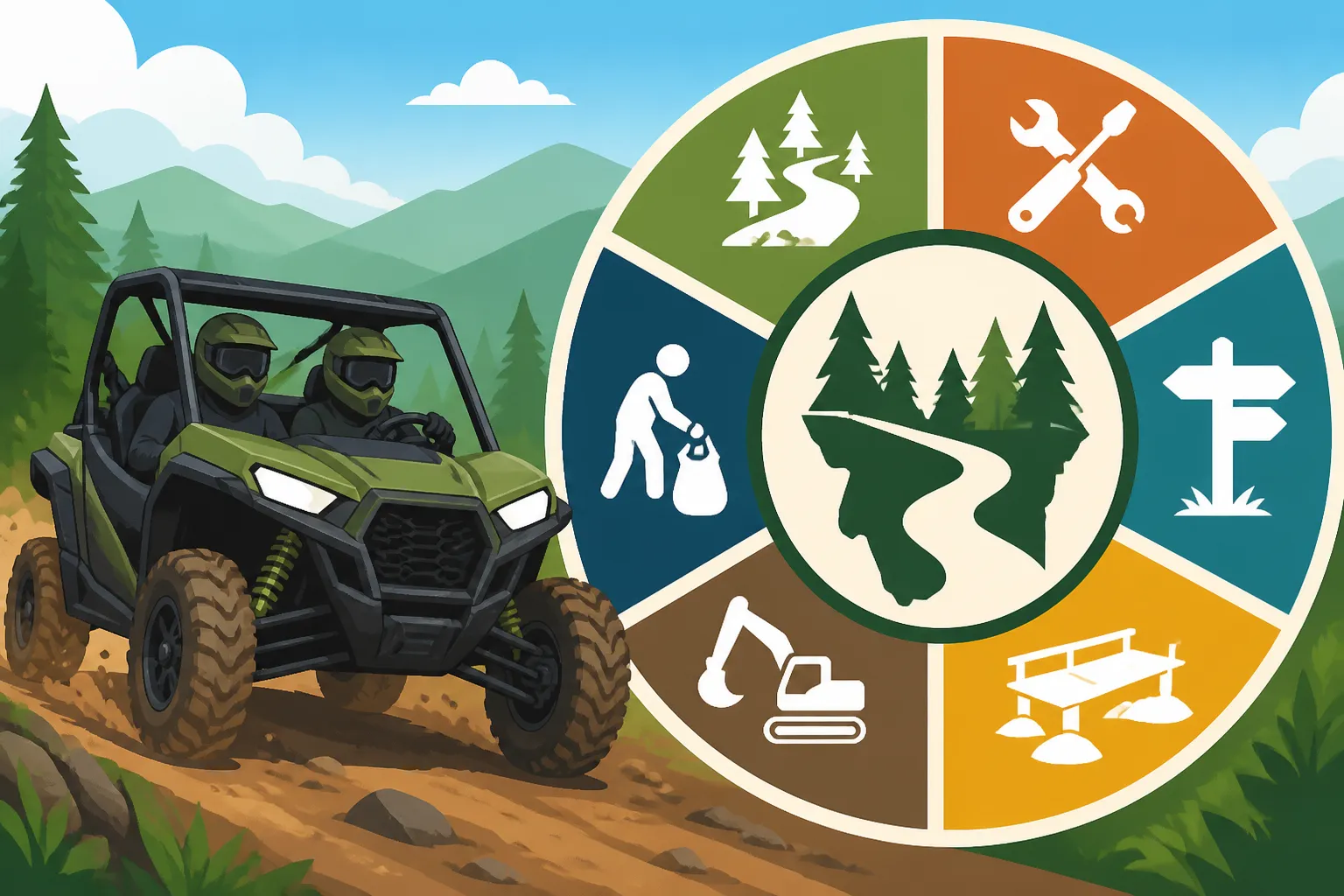
A recreation fee is intended to help keep the place where it is collected usable. Under the Federal Lands Recreation Enhancement Act, the USDA Forest Service retains at least 80% of recreation-site and permit revenue to operate, maintain, and improve local facilities. The Forest Service says that revenue is used locally for work such as trail repairs, restroom maintenance, habitat restoration, and safety improvements.
That is the clearest practical answer to the question in the title: permit money helps fund the work and facilities that make riding areas function. Trails need upkeep, and visitors rely on more than the trail surface itself. A trailhead may need a maintained restroom, signs that help riders understand where they can travel, or repairs after erosion and heavy use. Habitat restoration and safety work also matter, even when they are less visible than a freshly repaired section of trail.
The funding rule does not mean that every dollar paid by an individual rider goes to a specific repair on the exact loop that rider used. The Forest Service’s description covers local facilities and recreation operations, not a guaranteed one-to-one exchange between a particular permit and a particular project. It is more accurate to think of permit revenue as helping support the local recreation system, rather than as a personal payment for a named improvement.
| What recreation revenue can support | Why riders may notice it |
|---|---|
| Trail repairs | Helps address worn or damaged sections and keep routes usable |
| Restroom maintenance | Supports basic facilities at recreation sites |
| Habitat restoration | Helps repair areas affected by recreation or other damage |
| Safety improvements | Can support safer use and clearer recreation facilities |
| Local operations and maintenance | Helps keep facilities functioning beyond the trail surface |
The table describes the types of local work identified by the Forest Service. It is not a promise that every Ouachita permit payment is assigned to each category, or that every category receives the same amount. The Forest Service does not provide a project-by-project allocation in the facts summarized here, so riders should avoid assuming that a particular fee paid for a particular repair.
For a broader explanation of how different federal riding permits fit together, see Arkansas OHV Permits: Two Forests, Two Prices and Arkansas Riders Need Two Different Forest Passes. Forest boundaries and trail systems do not always match the boundaries riders picture from a map, and the permit that applies can depend on which land manager operates the recreation site.
Why spending locally matters to riders
A trail is a managed recreation facility, not just a line on a map. Its condition can change with weather, traffic, and maintenance needs. Permit revenue helps land managers address those practical needs and maintain the broader visitor experience, including places where riders park, get oriented, and take a break.
Trail repairs are the most obvious use to imagine, but repair work can mean more than smoothing a track. A damaged route may need attention to reduce erosion or restore a usable path. A sign or barrier may need maintenance so riders can distinguish a designated route from an area that is closed. The Forest Service identifies trail repair, habitat restoration, and safety among the local uses for recreation revenue; the specific work at a site depends on its needs.
Restrooms are another example of an improvement that can affect a ride without changing the trail itself. A well-maintained trailhead facility makes a day trip more practical, especially for groups or families. The same goes for parking and other visitor facilities, although the available facts do not identify a particular Ouachita parking project or promise that permit revenue will fund one. The point is that recreation fees support local facilities and operations, not only the dirt beneath the tires.
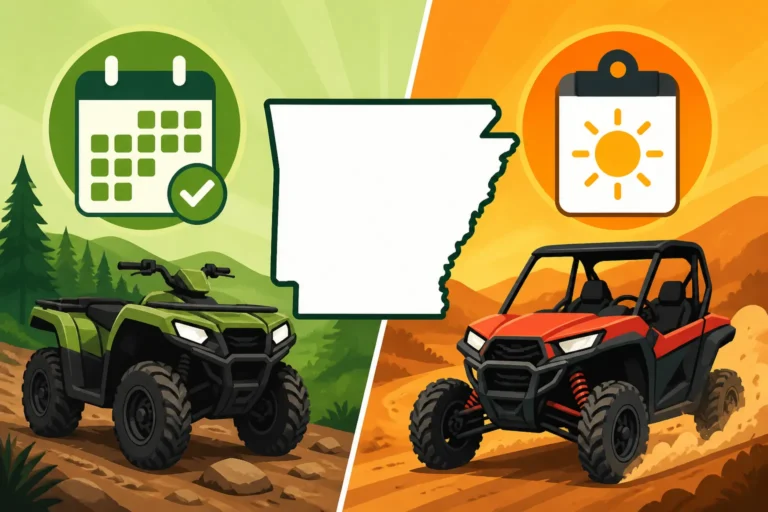
Seasonal access also shapes when maintenance and riding can happen. According to the USDA Forest Service, designated motorized trails in the Ouachita National Forest, including the Wolf Pen Gap Trail Complex, are typically open from the first Friday of March through October 31, with specified holiday periods from three days before Thanksgiving through two days after and from December 22 through January 2. Riders should check current status before traveling, because a typical schedule is not a guarantee that a particular route is open on a particular day.
That seasonal rhythm matters to planning. A closed trail may need protection or repair, and a route that has reopened may still have conditions worth checking. Fees help sustain local recreation facilities, but they do not guarantee that every trail will be open, dry, or in the same condition from one visit to the next. Arkansas Trail Conditions Before You Tow and Arkansas Trail Closures After a Storm can help you think through the checks to make before loading up.
The permitted route is part of the experience, too. Forest roads, designated motorized trails, and other public-land routes can have different rules. Staying on an allowed route protects the trail system and the surrounding land, and it reduces the risk of treating a closed road or sensitive area as an alternate route. For practical preparation, Arkansas Trail Etiquette Locals Expect offers a useful companion to understanding the fee side of trail use.
What the permit does not cover
One common source of confusion is treating a recreation permit as if it were a general license for every kind of riding. It is not. A permit or fee applies to the recreation site or activity identified by the managing agency; it does not override route restrictions, land-use rules, equipment requirements, or state law.
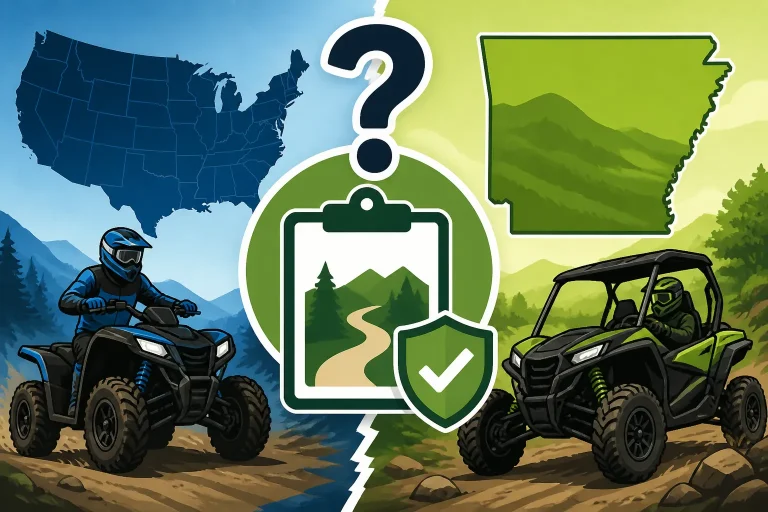
For example, the USDA Forest Service says that most general riding on designated routes in Arkansas national forests does not require a special OHV permit, but certain trail systems in the Ozark-St. Francis National Forests, including Mill Creek and Moccasin Gap, require a day-use fee or permit. Those are separate examples from the Ouachita, and they show why riders should verify the specific land manager and trail system rather than assuming one rule applies everywhere. The USDA Forest Service also notes that nonresidents generally do not need a separate Arkansas state OHV registration or trail permit to ride designated routes on federal public lands, though rules and entry permits can vary on lands managed by other agencies.
State ATV registration is another separate matter. According to the Arkansas Department of Finance and Administration, ATV registration costs $5.00 as of November 2026. That state registration fee is not the same thing as a Forest Service recreation fee or a site-specific day-use permit. For more on the distinction, see Arkansas Registration Compared to Its Neighbors and Arkansas Permits Are Per Vehicle.
A fee does not make an otherwise prohibited action legal. Arkansas generally prohibits ATV use on public streets and highways, subject to specific exceptions such as certain farming or hunting uses and direct road crossings. According to the Arkansas General Assembly, general ATV operation on paved state highways is not permitted. A forest pass, trail permit, or registration should not be read as permission to ride on a highway.
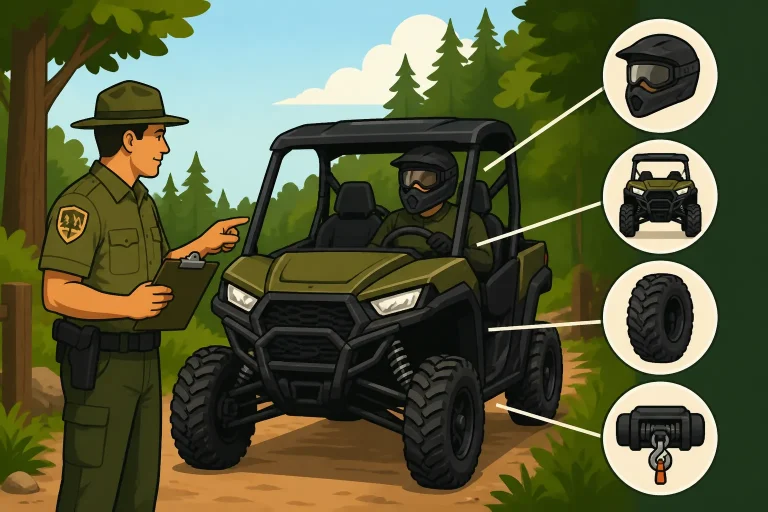
Likewise, required equipment and vehicle rules remain in force. The USDA Forest Service requires off-highway vehicles with internal combustion engines operating in the Ozark-St. Francis National Forests to have a properly installed and maintained spark arrester under federal regulations. Arkansas law also prohibits operating an ATV with a modified exhaust or a removed or modified spark arrester. Paying a trail fee does not replace these requirements.
The land manager matters as much as the fee. The National Park Service oversees regulations within Buffalo National River boundaries, for example, so Forest Service rules should not automatically be applied there. State-managed wildlife areas can have their own entry and vehicle restrictions as well. Before riding, identify who manages the place you plan to visit and check that agency’s current requirements.
How to make sure your fee and ride are set up correctly
A little planning helps prevent both wasted travel and the mistaken belief that one payment covers every nearby riding area. Use this process before heading out:
- Identify the exact riding area. Confirm the trail system and the land manager responsible for it. A national forest, wildlife management area, state park, and national river may have different rules.
- Check whether the site requires a fee or permit. General riding rules do not necessarily settle what applies at a specific trail system or recreation site. Verify the requirement for the place you intend to use.
- Confirm the route is open. Seasonal schedules and temporary closures can affect access. Check the land manager’s current information before you leave.
- Separate the paperwork. Keep state registration, a site-specific permit, and any other required documents distinct in your planning. One is not automatically a substitute for another.
- Review equipment and route rules. Check requirements such as spark arrestors and stay on designated routes. A paid permit does not waive them.
- Save proof of payment and any instructions. Keep a receipt or permit confirmation available in the manner the site requires. If you are uncertain whether a digital record is accepted, confirm before relying on it.
If you are comparing an annual option with a day permit, the best choice depends on how often you expect to use the relevant area and what the permit actually covers. Do not assume a pass for one forest or recreation site works at another. Arkansas Annual Versus Day Permits, Why One Forest Pass Does Not Cover the Other, and Buying a Pass Before You Leave Home cover related planning questions.
It is also worth remembering that public-land rules and private-park rules are not interchangeable. A private riding park may charge admission under its own terms, while public-land recreation fees are handled by the relevant agency. Check the operating rules for the land you are visiting, rather than relying on a permit or payment from a different property.
The practical takeaway is straightforward: Ouachita permit revenue supports local recreation facilities and maintenance, including trail repairs, restrooms, habitat restoration, and safety work. The fee is part of sustaining public recreation, not a promise that a specific trail will be repaired on a set schedule or that every route will be open. Knowing who manages the site, which fee applies, and what rules remain in force is the best way to make sure your payment and your ride match.
Sources
- Department of Finance and Administration — Arkansas Code § 27-20-202 (2025) – Registration required (checked November 2, 2026)
- USDA Forest Service — Wolf Pen Gap – Ouachita National Forest (checked November 2, 2026)
- USDA Forest Service — Ouachita National Forest Seeks Comments on Proposed Changes to Recreation Fees (checked November 2, 2026)
Disclaimer
This article is for general informational purposes only and does not constitute professional advice. Laws, prices and regulations vary by location and change over time. Consult a qualified professional for guidance on your specific situation.