When an Arkansas Park Sends You Home
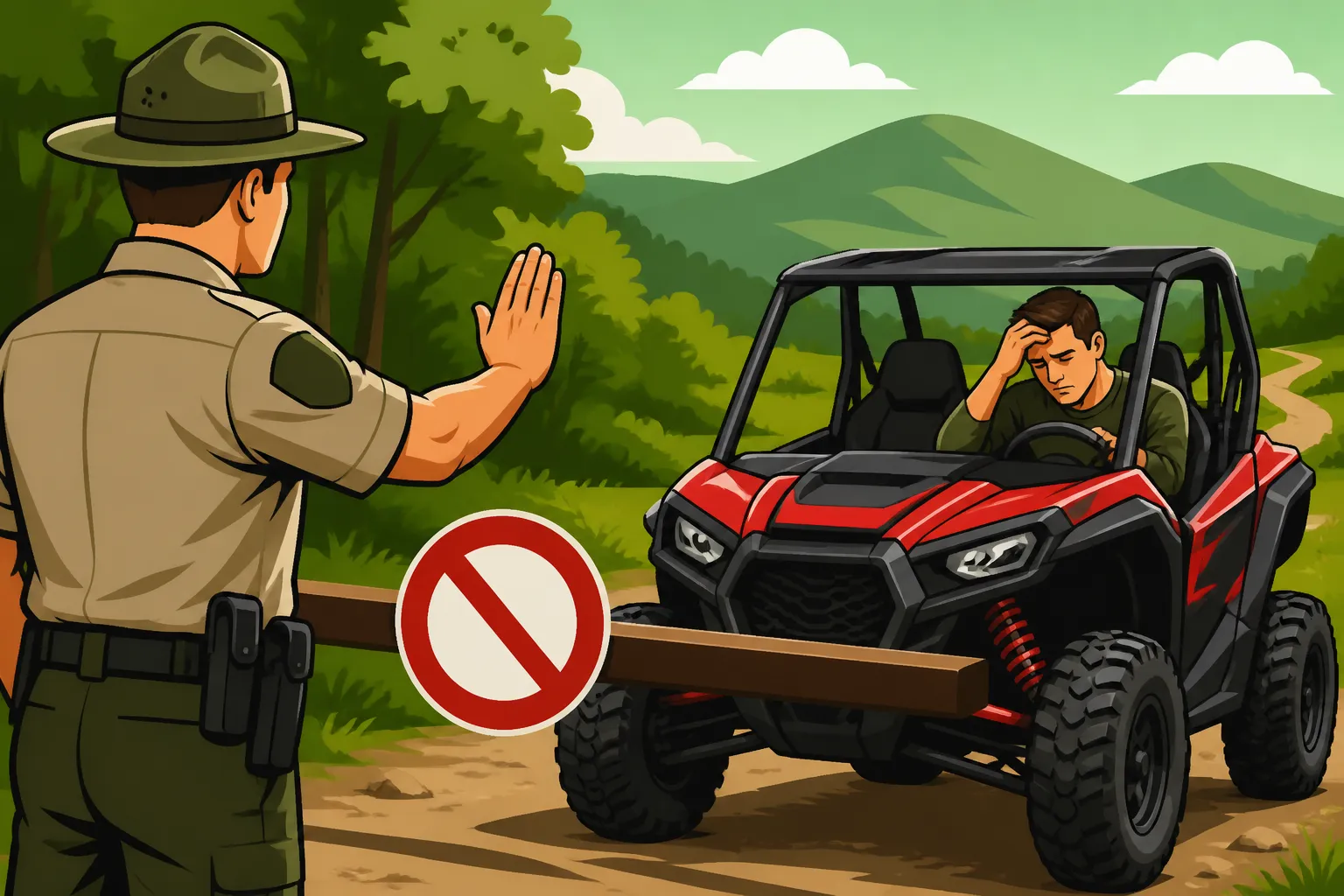
A day at an Arkansas off-road park can end at the gate if your machine, paperwork, or group does not meet that park’s rules. Those rules vary, and a forest permit or out-of-state registration may not satisfy a private park’s entry requirements. Here’s what commonly leads to a turnaway, what to ask before you travel, and how to handle a problem at check-in.
Why an Arkansas park may refuse entry
A park can have its own admission, safety, and operating rules. A machine that is legal to own or ride elsewhere is not automatically eligible at every park. Private parks set conditions for using their property, and staff may refuse entry when a rider or machine does not meet those conditions.
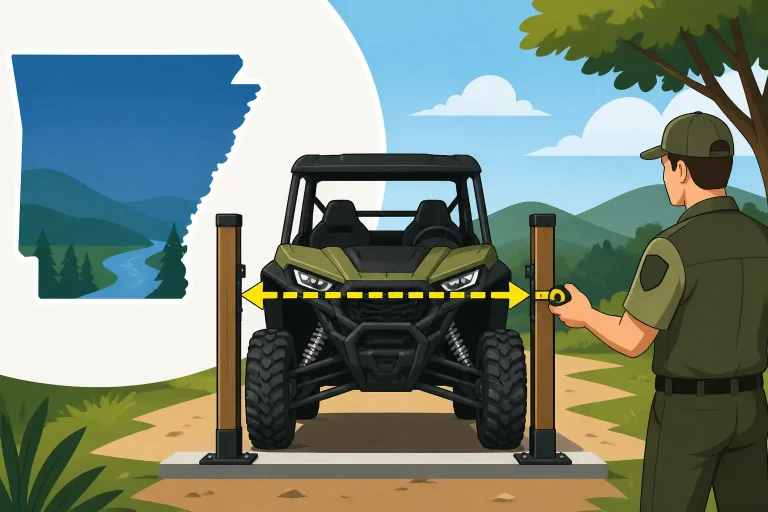
The reason may be straightforward: the park is closed, a trail is unavailable, or the machine is too wide for a route or gate. It may also involve your group’s age, required safety gear, proof of insurance, a signed waiver, or conduct at the entrance. Each park’s rules are different, so do not assume that one park’s decision or policy applies across Arkansas.
| Possible reason for being turned away | What to check before leaving | Practical next step |
|---|---|---|
| Machine does not fit the park or trail | Width limits, machine types, and any gate restrictions | Give the park your machine’s model and width |
| Required documents are missing | Registration, permit, identification, or insurance requirements | Ask which documents must be shown at check-in |
| Rider does not meet an age or supervision rule | Minimum age, driver requirements, and adult supervision rules | Confirm the rule for each rider and passenger |
| Safety gear or equipment is inadequate | Helmet, eye protection, lights, or other stated requirements | Ask whether specific equipment is required or supplied |
| Waiver or conduct issue | Waiver process, alcohol rules, and behavior policies | Have each rider review and complete required forms |
| Park or trail is unavailable | Operating status, closures, weather, and capacity | Check directly with the park on the day of travel |
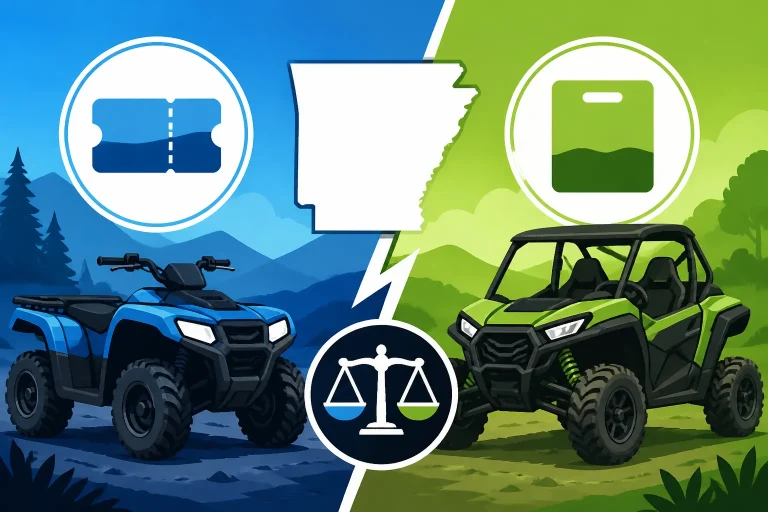
A park may also restrict certain activities or vehicles even if it allows other types of off-highway vehicles. A quad, dirt bike, side-by-side, and other machine may not be treated identically. If you are bringing a machine with unusual dimensions, a passenger setup, or modifications, describe it accurately when you call. Avoid relying on a broad label like “UTV” if the park needs details such as width, seating, or equipment.
A permit for one place may not work at another
Visitors sometimes arrive with a permit or registration and assume it grants access everywhere. It helps to separate three different things:
- Vehicle registration or an off-highway decal: This relates to the machine and the applicable state requirements. It is not, by itself, permission to enter every riding area.
- A public-land permit: Forest riding areas can have their own permits, boundaries, and conditions. A pass for one forest does not necessarily cover another, as explained in Why One Forest Pass Does Not Cover the Other.
- A private park’s admission and waiver requirements: A private park may require its own payment, waiver, safety compliance, or other conditions.
An Arkansas forest permit does not automatically grant access to a private park, and a private park’s admission does not replace any permit required for public land. The distinction matters when planning a trip that includes multiple riding areas. Check Arkansas Private Park Waivers and Rules for the kinds of park-specific conditions to review, and see Arkansas Permits Are Per Vehicle for a separate explanation of vehicle-based forest permits.
Out-of-state visitors should make the same distinction. An out-of-state registration decal may be relevant to the machine, but it does not settle whether a particular private park will admit it. Ask the park what it accepts and what it requires at the gate. For public-land riding, confirm the rules for the specific forest or trail system rather than assuming a private park’s policy carries over.
Documents, riders, and machine details to confirm
A last-minute disagreement is more likely when a rider arrives without knowing what the park expects. Call or check the park’s current information before setting out, and ask about the exact machine and everyone in the group. The answer may depend on the park’s own rules, the trail you want to ride, or the activity you plan to do.
Identify the machine precisely
Be ready to give the make and model, approximate width, number of seats, and whether the machine has any modifications that affect its size or safety equipment. A machine that fits one trail may not fit a narrower trail or gate. Some riding areas have restrictions that affect larger side-by-sides, so do not infer access from a park’s general description.
If the machine is rented, ask both the rental business and the park who is responsible for permits, required equipment, and check-in documents. A rental agreement does not necessarily guarantee that the machine meets a separate park rule. See Arkansas Rentals and Trail Permits for a related look at how rentals and riding-area requirements can intersect.
Bring the registration or ownership paperwork you normally carry, but do not assume it is the only document the park may request. If the vehicle identification number or ownership record is incomplete, resolve that issue with the relevant registration office before the trip when possible. A private park’s decision to admit a machine is separate from whether its ownership paperwork is sufficient for state registration.
Ask about age, supervision, and passengers
Age limits can apply to drivers, passengers, or both. They may also differ by machine type or riding activity. A child who can ride at one park might not meet another park’s minimum age or supervision requirements. Check the rules for each child in your group rather than asking only whether “kids are allowed.”
If a child will be a passenger, explain the child’s age and the machine’s seating arrangement. Ask whether the park permits that arrangement and whether it has requirements for seat belts, helmets, or supervision. Do not assume that a passenger seat makes a machine suitable for a small child. The park may have a minimum age or other safety conditions; [Arkansas Private Park Age Minimums] addresses this issue.
Also check which adult must supervise a young rider and whether that adult needs to stay with the child on the trail. A parent’s permission or a signed waiver may not override a park’s age and supervision rules. If the answer is unclear, ask the park to explain the rule before you arrive rather than trying to resolve it with a child waiting at the gate.
Confirm insurance, waiver, and safety requirements
Parks may ask about insurance, and their requirements can differ. Ask whether proof must specifically identify the machine or rider, whether a digital document is acceptable, and whether insurance is required for every machine or only certain activities. Do not assume that a personal policy covers every off-road use or satisfies a park’s conditions. For more detail on the park side of this question, see Arkansas Private Park Insurance Rules.
Waivers are another common point of friction. Find out who must sign, whether each adult signs individually, and what process applies to minors. Do not count on being able to complete every form quickly on a phone with poor service. If a parent or guardian will not be present, ask the park in advance whether it accepts the required paperwork in that situation. Arkansas Private Park Waiver Forms offers more on this part of the check-in process.
Ask what protective equipment is required, not just what the park recommends. Helmets and eye protection are sensible items to pack even where a park does not list them as entry conditions. If the park has a specific helmet rule, confirm whether it applies to drivers, passengers, and children. Arkansas Private Park Helmet Rules covers park rules separately from general riding advice.
What to do if staff turn you away
If the gate staff say your group cannot enter, keep the conversation calm and ask for the specific reason. A clear answer helps you distinguish a missing document from a machine restriction or a park closure. It also tells you whether the issue can be fixed immediately or whether the trip needs to change.
- Ask which rule applies. Find out whether the issue concerns the machine, a rider, a document, equipment, conduct, or trail access.
- Clarify whether it applies to the whole park or only a particular trail or activity. A machine might be excluded from one route but allowed elsewhere, though you should rely on the park’s answer.
- Ask whether there is an accepted way to resolve it. For example, the park may allow a missing form to be completed on site, but do not assume it will.
- Do not ride in without permission. Paying an admission charge, showing a state registration, or having a forest permit does not authorize entry onto private property.
- Record what you were told. Note the rule, the person or office you spoke with, and any follow-up information. This is useful if you need to rebook or ask the park to clarify its published policy.
If you believe staff misunderstood your machine or paperwork, explain the detail without arguing about a rule you have not verified. A calm question such as “Is this a width restriction, or a general machine restriction?” can help identify whether there is an alternate route or whether the park cannot admit that vehicle at all. If the answer is final, respect it and make a new plan.
Do not try to solve an admission problem by removing a required safety feature, misrepresenting a machine’s dimensions, or entering through a different access point. That can create a safety risk and may lead to further consequences. If the park does not allow the machine, look for a different riding area whose rules fit it. [Arkansas Private Park Age Minimums] and Arkansas Private Park Insurance Rules are useful checks when the refusal concerns riders or insurance rather than the vehicle itself.
If the issue is a trail closure, ask whether the closure affects the entire property or only a section. Weather, trail conditions, maintenance, or capacity may change access plans. A park may not be able to offer the same riding options every day, and a reservation or prior visit should not be treated as a guarantee that every trail will be open. Check current conditions directly before making a long drive.
How to prevent a wasted trip
The best time to resolve entry questions is before loading the trailer. Use the park’s official contact information and ask direct questions about the day you plan to visit. If a policy is important to your decision, get the answer in writing or keep a note of the information provided. Park policies can change, and an old social media post or another rider’s memory may not reflect the current rule.
Use this checklist when you call:
- What machine types are allowed, and are there width or trail-specific limits?
- What registration, permit, or proof of ownership should riders bring?
- Does the park require proof of insurance? If so, what must the document show?
- What waivers are required, including for minors?
- What age, supervision, and passenger rules apply to our group?
- What helmets, eye protection, or other equipment are required?
- Are there rules about alcohol, pets, camping, noise, or operating hours that could affect our visit?
- Are the park and the trails we plan to ride open on our travel date?
- If the machine or a rider does not meet a requirement, is any alternative available?
Policies about alcohol, pets, camping, and quiet hours may seem unrelated to getting onto a trail, but they can affect admission or continued access to the property. Check those rules if your trip includes an overnight stay, a dog, or a group gathering. See Arkansas Private Park Alcohol Rules, Arkansas Private Park Camping Rules, and Arkansas Private Park Pet Rules for focused information on those topics.
It is also worth preparing for a change in plans. Keep a second riding option in mind, but confirm its rules separately rather than assuming your first park’s paperwork or permit will carry over. If your alternate destination is public forest land, verify the applicable forest pass, route access, and conditions. If it is another private park, ask that operator directly about its admission policy.
Finally, be realistic about what a park can confirm. Staff may be able to tell you whether a machine fits a posted limit or whether a required document is acceptable, but they cannot guarantee that conditions will remain unchanged after you arrive. A vehicle that meets the entry rules can still be restricted from a particular trail because of closures or conditions. Confirm the basics, bring the required documents and gear, and follow the decision made at the gate.
Disclaimer
This article is for general informational purposes only and does not constitute professional advice. Laws, prices and regulations vary by location and change over time. Consult a qualified professional for guidance on your specific situation.