Arkansas Annual Versus Day Permits
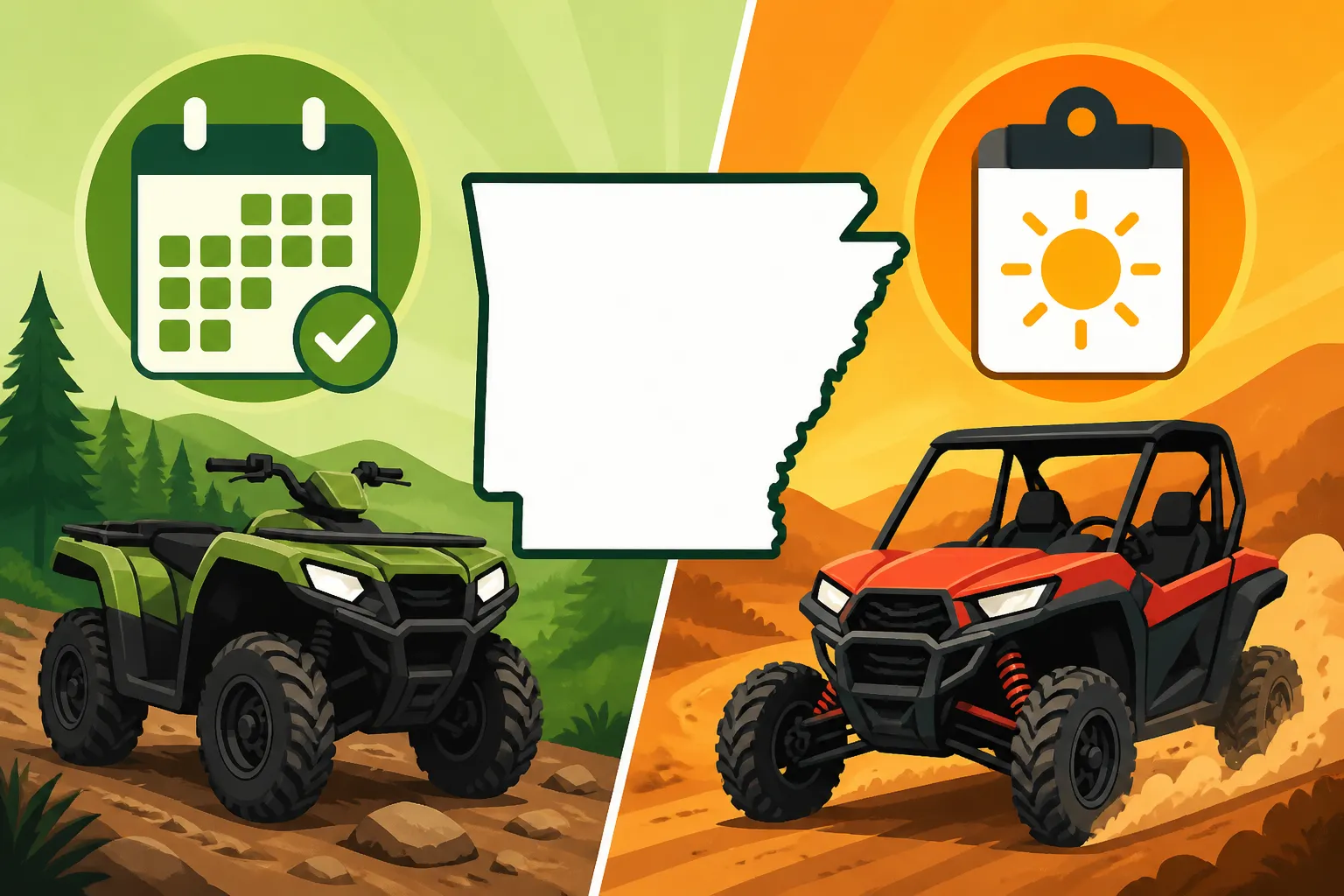
A day permit can be the simplest choice for a one-off ride, while an annual permit may suit riders who return to the same forest system. The tricky part is that Arkansas has more than one OHV permit system, and buying a pass is separate from registering your machine. Here’s how to compare the options, avoid paying for the wrong pass, and check what applies to your trip.
What an Arkansas annual or day permit covers
An OHV permit is permission to ride in a particular managed area under that area’s rules. It is not a general Arkansas riding pass, and it does not replace any registration or other requirement that applies to your machine.
The first step is to identify where you plan to ride. Arkansas riders commonly need to distinguish the Ouachita National Forest system from the Ozark-St. Francis National Forest system. Their permits are separate; a pass for one does not automatically cover the other. If your trip includes trails in both systems, plan on meeting each system’s requirements. The overview in Arkansas OHV Permits: Two Forests, Two Prices and the explanation in Why One Forest Pass Does Not Cover the Other can help you keep the systems straight.
An annual permit generally makes sense when you expect to ride the same permit area repeatedly during its validity period. A day permit is designed for a shorter visit, but the exact validity window and purchase conditions are set by the issuing system. Don’t assume an annual permit starts on the day you buy it or lasts for a rolling twelve months. Check the pass terms before paying.
A permit may be tied to a machine rather than to the person holding it. That matters if you own more than one ATV or UTV, travel with a group, or switch machines during the season. Confirm whether each vehicle needs its own permit, and whether the permit must be displayed on the machine or carried in a particular way. For more on this distinction, see Arkansas Permits Are Per Vehicle.
| Question | Day permit | Annual permit |
|---|---|---|
| Best fit | A single outing or occasional visit | Several visits to the same covered area |
| What to verify | The date or period it covers and where it is valid | Start and end dates, covered area, and machine assignment |
| Likely drawback | Repeated day purchases can add up | You may pay for coverage you do not use |
| Applies across both national forests? | Not automatically | Not automatically |
| Replaces Arkansas registration? | No | No |
The annual-versus-day choice is only one part of trip planning. A forest permit does not necessarily authorize riding on every nearby trail, road, wildlife area, or private property. Before you leave, confirm that the specific route is open to your type of machine and that its permit requirements match the pass you are buying.
Keep forest permits separate from machine registration
Arkansas ATV registration and a forest OHV permit solve different problems. Registration is a state-level requirement for qualifying machines; a forest permit is for use in a particular riding system. One does not stand in for the other.
That distinction can be easy to miss when you are preparing a machine for its first Arkansas ride. A permanent state registration decal does not mean you have paid for forest access. Likewise, buying an annual forest pass does not register the machine with the state. For the registration side, see Arkansas ATV Registration Has No Annual Renewal and Do Out-of-State Riders Need an Arkansas Registration Decal?.
When in doubt, check both questions independently:
- Is the machine required to be registered for the riding you plan to do?
- Does the trail system require a separate permit?
- Is your particular machine allowed on the route?
- Are there additional area rules, closures, or seasonal restrictions?
A quick check now is easier than discovering at a trailhead that you have the right kind of pass for the wrong place.
How to decide whether an annual or day permit is better
The easiest way to compare the two options is to estimate how many eligible ride-days you will actually use. Don’t count every weekend you might ride. Count trips you realistically expect to make to the area covered by that permit.
Compare the current annual permit cost with the total cost of the day permits you would need for those visits. Because permit prices and terms can change, use the issuing forest’s current information rather than an old receipt, saved screenshot, or a figure from someone else’s trip.
A simple break-even check works like this:
- Find the current cost of the annual permit and the day permit from the official source.
- Confirm whether each permit is assigned per vehicle and whether a permit covers one date, a stated period, or another defined window.
- Estimate the number of covered ride-days for each machine you expect to take.
- Multiply the day-permit cost by the number of permit-days you would need.
- Compare that total with the annual option, then account for the annual permit’s actual start and end dates.
If the annual option costs less than the day permits you would otherwise buy, and you are confident you will ride in that covered area enough times, it may be the better value. If your schedule is uncertain or you will visit only once, a day permit can avoid paying for unused coverage.
Count covered days, not just trips
A “trip” can mean different things. You might ride one day, spend a long weekend riding on separate dates, or visit two trail systems during a single vacation. The permit rules may treat those situations differently. Check how the issuer defines a day and how long a day permit remains valid before using a trip count in your calculation.
Also count each machine separately if permits are issued per vehicle. A family riding two machines may need two permits even when everyone travels together. A group using several machines should not assume that one purchase covers the whole group. The details are explained in Arkansas Permits Are Per Vehicle.
For a weekend, compare the number of permit-days required with the annual option’s coverage. Do not assume that a day pass bought for one date covers a second date just because you stay at the same campsite. Read the pass terms, especially if you plan to ride on multiple days or move between permit areas.
Factor in where you will actually ride
An annual pass is most useful when your planned rides fall within the area it covers. If you expect to spend one day in the Ouachita system and another in the Ozark-St. Francis system, one annual pass may not cover both. The same is true for day permits: a pass for one system should not be treated as a general pass for every Arkansas trail.
Make a short list before deciding:
- Which trail system or forest will you visit?
- How many days will you ride there?
- How many machines are in your group?
- Will you revisit that same covered area before the permit expires?
- Does the permit cover the full period you expect to ride?
A single annual purchase can be good value for a frequent visitor who returns to the same system. It can be poor value for a rider who takes one trip, chooses a different area next time, or buys late in the permit period. Compare the coverage dates with your calendar instead of choosing based on the word “annual” alone.
Different systems mean different passes and rules
Arkansas does not have one statewide forest OHV permit that works everywhere. Each permit issuer sets its own process and terms, so check the official information for the exact area you plan to ride.
The Ouachita National Forest and Ozark-St. Francis National Forest are separate systems. If your plans include both, treat them as separate permit checks. A permit purchased for one forest should not be assumed to cover the other. For a broader explanation, see Arkansas Riders Need Two Different Forest Passes.
There may also be differences in where and how a permit is sold. Some permits may be available online, while some locations use a self-service fee station or another process. Availability and instructions can change, so verify the current method before you tow. The guides Arkansas Permits Bought on Recreation.gov, Arkansas Self-Service Fee Stations, and How to Buy an Arkansas Forest OHV Permit cover the kinds of purchase routes to check.
Match the pass to the exact riding area
The nearest town is not a reliable way to identify the permit you need. A trail system’s location, managing agency, and access point matter more than the town where you buy fuel or spend the night.
Before purchasing, look for the official trail-system name and confirm:
- Which agency manages the riding area.
- Which permit is required for OHV use there.
- Whether the annual and day options are both accepted at that location.
- Whether the permit applies to the specific trails or roads on your planned route.
- Whether the route is open to your machine’s type and width.
- Whether any trail closures or seasonal limits affect your dates.
This is especially important if you are combining a forest trail day with a private park visit. A forest permit should not be assumed to cover a private park, and a private park’s admission or riding pass does not automatically cover a national forest.
Don’t rely on someone else’s pass
A friend’s experience is useful for knowing what questions to ask, but it is not a substitute for checking the current rules. They may ride a different system, use a different machine, or have purchased a permit under different terms. Even a pass that looks similar can have a different area or validity period.
If you ride with a group, ask each rider or machine owner to verify their own coverage. Don’t assume the trip organizer’s annual permit covers everyone. If one person buys several permits for a group, make sure the issuing system allows that and that every machine is correctly accounted for.
Buying and carrying the right permit
Once you know which permit applies, follow the issuing system’s current purchase instructions. If buying online, check whether you need to print the permit, display a pass on the machine, or keep proof available in another form. If you plan to buy at a fee station, confirm that the station serves the right area and learn how it accepts payment before setting out.
Allow time for practical details. A remote trailhead may have limited or no cell service, so don’t count on loading a page or completing a transaction after you arrive. Save or print the confirmation in advance, and keep a copy where it will not be damaged by rain, mud, or washing.
A small waterproof pouch or document sleeve can help protect printed paperwork. If you buy a simple clear sleeve on Amazon, check that it closes securely and can be attached or carried in a way that does not interfere with riding or obscure required information. A phone screenshot is useful as a backup, but it may not replace a required printed or displayed permit.
Check the display and proof requirements
Do not guess where a pass belongs. Instructions may specify that it must be displayed on the machine, while other proof may need to be carried by the rider. Follow the current official directions and make sure the permit stays legible and attached throughout the ride.
Before leaving home:
- Confirm that the permit is for the correct forest or riding system.
- Check the validity dates or period.
- Match the permit to the correct machine if it is vehicle-specific.
- Print or save the purchase confirmation as directed.
- Attach or carry the pass exactly as required.
- Keep a backup copy separate from the original if practical.
A basic document sleeve or small waterproof pouch bought through Amazon may be a convenient way to keep a paper copy dry, but the pouch itself does not determine whether the permit is valid. The issuing agency’s instructions do.
Keep permit proof separate from registration paperwork
Carry what the rules require for the trail system and for the machine. A state registration document, forest permit, proof of purchase, and insurance paperwork are not interchangeable. Keep them organized so you can produce the right item if asked.
It can help to keep a small folder in the tow vehicle with machine documents and a separate copy of the permit in the machine or on your phone, where appropriate. For paper copies, avoid placing them loose in a cargo area where they can get wet or blow away. If you use Amazon to find a compact waterproof organizer, choose one that fits your vehicle and can be secured; loose gear can become a distraction or hazard on rough trails.
If a ranger or other authorized official asks to see proof, make it easy to identify which permit belongs to which vehicle. For a group, label paperwork with a machine description or the last digits of the serial number, without altering the permit itself.
Common mistakes and a practical pre-ride checklist
Most permit problems come from a few avoidable assumptions: that an annual pass works everywhere, that one purchase covers a group, or that a state registration decal is the same as trail access. A brief check before departure helps prevent all three.
Mistakes to avoid
- Buying a pass for the wrong forest. Check the managing system, not just the region or nearby town.
- Assuming one forest pass is reciprocal. Ouachita and Ozark-St. Francis permits are separate.
- Treating a forest permit as state registration. They serve different purposes.
- Assuming one permit covers every machine. Verify whether each vehicle needs its own.
- Assuming “annual” means twelve months from purchase. Read the exact validity terms.
- Buying a day pass without checking its time window. Confirm the dates or period it covers.
- Relying on an old price or saved post. Check the official source for current costs and procedures.
- Waiting until you reach a no-service trailhead. Complete the purchase and save the proof before leaving.
- Assuming a permit means a trail is open. Check conditions, closures, machine restrictions, and area rules separately.
Final check before towing
Use this list for each trip:
- Name the trail system and verify its managing agency.
- Confirm the required permit and whether you need an annual or day option.
- Check the current cost, validity period, and purchase process with the official issuer.
- Count the machines, not only the riders.
- Confirm that each machine is allowed on your intended routes.
- Check for closures, seasonal restrictions, and trail conditions.
- Complete any online purchase before losing cell coverage.
- Print, save, display, or carry proof as instructed.
- Keep the forest permit separate from state registration and other machine documents.
- Recheck the rules if you add another forest or riding area to the itinerary.
For route planning, the permit is only one piece of preparation. Check Arkansas Trail Conditions Before You Tow for the kind of information to review before making a long drive, and confirm current instructions with the land manager when anything is unclear.
Annual permits are most useful when you expect to return to the same covered system often enough to justify the cost. Day permits are a sensible choice for a one-time outing or a trip with uncertain plans. In either case, the safest approach is to verify the specific area, machine, dates, and proof requirements before you leave.
Disclaimer
This article is for general informational purposes only and does not constitute professional advice. Laws, prices and regulations vary by location and change over time. Consult a qualified professional for guidance on your specific situation.