Arkansas Private Park Camping Rules
Camping at an Arkansas ATV or UTV park can make a ride easier, but “camping allowed” does not tell you where you may set up, whether you need a reservation, or what happens when riding hours end. Private parks set their own site rules, and those rules can differ from public-land permit requirements. Confirm the details with the property before you load up.
Confirm what “camping at the park” means
A riding park may have campsites on the property, partner with a nearby campground, or allow riding access from lodging that is not part of the park. These options are not interchangeable. A nearby campground may have its own rules and may not offer a legal or approved route into the riding area. Ask exactly where you will sleep and how you and your machine get between the campsite and the trails.
Do not assume camping is included with trail access, a rental, or a day pass. Ask whether your reservation covers the campsite, riding admission, parking, and any required vehicle or trail fees. If you are renting, check whether the rental provider permits overnight use and whether you must return the machine to a designated area at the end of the day. A package that includes camping does not necessarily cover every park fee or every night, so compare the inclusions in writing.
Policies also vary between private parks and public riding areas. A forest permit is not a substitute for a private park’s admission or camping requirements, and a private park pass does not automatically authorize riding elsewhere. If your trip includes more than one riding area, sort out the rules for each one separately. Arkansas Permits at Byrd’s and Similar Parks and Arkansas Riders Need Two Different Forest Passes can help clarify why it is important to check which kind of access applies.
Before you book, ask the park these questions:
- Are overnight stays allowed on the dates you want?
- Do you need to reserve a campsite, or can you arrive without a booking?
- Is the campsite inside the riding property, beside it, or at a separate location?
- Does the campsite reservation include riding access, or are those booked separately?
- Can you ride directly from the campsite to the trails?
- Are there restrictions on machine size, campsite occupancy, or the number of vehicles?
- What are the check-in, riding, and quiet-hour times?
- Are tents, travel trailers, and RVs all allowed, and are hookups available?
- What happens if severe weather or a trail closure affects your reservation?
Keep the answers with your booking confirmation. If staff explain a special arrangement by phone, ask them to confirm it by message or email. That can help avoid confusion at check-in, especially when several people in a group have made separate reservations.
Compare campsites and ask about the rules
A campsite can look suitable online and still be awkward for a group with trailers, several machines, or children. Ask about the site’s surface, parking, access route, and available facilities before choosing it. A steep, muddy, or tight entrance can complicate setup even when the campsite itself has enough room.
| Camping detail | What to confirm | Why it matters |
|---|---|---|
| Reservation | Booking deadline, cancellation terms, and whether the site is assigned | A preferred site may not be available on arrival |
| Site type | Tent, RV, travel trailer, or other permitted setup | Properties may limit what can be placed at a site |
| Parking | Space for the tow vehicle, trailer, and any extra vehicles | Parking outside the assigned area may be restricted |
| Utilities | Availability of power, water, or sewer connections | Do not plan on hookups without confirmation |
| Restrooms | Location, access hours, and whether showers are available | Facilities may be shared or a walk from the site |
| Machine storage | Where machines may be parked overnight and whether they must be secured | Some parks restrict machine use or movement after riding hours |
| Fire policy | Whether open fires, grills, or portable fire pits are allowed | Fire rules can change with conditions and park policy |
| Pets and visitors | Whether they are allowed and what restrictions apply | Rules may cover leashes, fees, or access to riding areas |
| Quiet hours | When they begin and how they apply to generators and groups | Noise can carry between campsites |
Do not rely on old photos, informal social posts, or another visitor’s past experience for current rules. A park may change campsite layouts, available services, or restrictions. Check the park’s current information and contact staff directly if a detail affects your setup. For background on common park policies, see Arkansas Private Park Waivers and Rules, Arkansas Private Park Insurance Rules, and [Arkansas Private Park Quiet Hours].
Some parks have separate requirements for riders, passengers, or children. Confirm the minimum age to operate a machine, whether passengers are allowed on the machine you plan to use, and what supervision is expected. Camping with a family does not mean every child can ride every machine or enter every trail. Review Arkansas Private Park Age Minimums and Arkansas Private Park Helmet Rules, then follow the specific park’s current instructions.
If you are bringing a dog or another pet, ask where it may go and whether it must remain leashed. A pet policy may apply not only to the campsite but also to parking areas, facilities, and trail access. Get those details before you arrive rather than assuming the pet can stay with the group throughout the day. [Arkansas Private Park Pet Rules] offers more context for questions to ask.
Set up camp without creating problems for the ride
When you arrive, check in before unloading unless the park has given you different instructions. Staff can direct you to the correct site, explain where trailers may be parked, and identify areas that are off limits. Keep the check-in instructions accessible, especially if your group will return to camp at different times.
Set up only within your assigned area. Keep access roads, emergency routes, gates, and neighboring sites clear. Secure machines and trailers where the park directs, and do not use a campsite as a repair or wash area unless that is permitted. Fuel, oil, muddy runoff, and loose equipment can cause damage or create hazards for other campers. If you need a wash station or repair service, ask where it is and whether it is open to campers.
Before your first ride, make sure everyone knows:
- Where the campsite is and how to find it again.
- The park’s riding hours and the time machines must be off the trails.
- Which trails and areas are open to your machine.
- Where to check in or contact staff if someone is delayed.
- Where drinking water, restrooms, and emergency help are available.
Do not treat the campsite as permission to ride on every road or path nearby. A private road, campground lane, or connecting route may have its own restrictions. Follow the park’s signs and staff directions, and ask before riding an unclear route. If the park has a separate designated area for loading, unloading, washing, or parking, use it rather than improvising at your site.
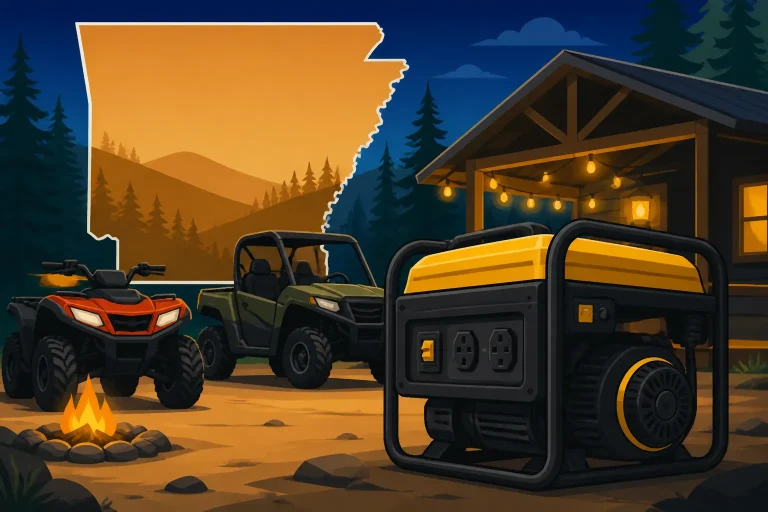
Fire rules deserve particular attention. Ask whether the park allows campfires, charcoal grills, propane appliances, or portable fire pits, and where they may be used. A general statement that “campfires are allowed” may still come with limits on location, supervision, or extinguishing the fire. Conditions can also lead a property to restrict fires temporarily. Keep a fire attended if permitted, follow the park’s instructions, and do not leave hot coals or embers behind.
Noise is another common source of conflict. Generators, music, late-night conversations, and machines returning after hours can disturb nearby campers. Follow posted quiet hours, and ask whether the park has specific generator or engine restrictions. If your group arrives late, reduce noise while unloading and avoid starting machines unless staff have approved it. Arkansas Private Park Alcohol Rules is also worth checking if your group plans to bring alcohol; do not assume rules for a campsite are the same as rules on the riding property or trails.
Pack for the campsite you actually booked, rather than the one you hope is available. If the site has no reliable power or water, plan to bring what you need and manage waste appropriately. A headlamp, drinking-water containers, trash bags, and a weatherproof pouch for reservation details can make arrival easier; those items are available from many retailers, including Amazon. Keep valuables and riding gear secured, and store food in a way that follows the park’s instructions.
Check out carefully and plan for changes
Before leaving home, save the park’s contact details, reservation confirmation, and directions where you can reach them without cell service. Ask about arrival after office hours, late check-in, and what to do if the gate is closed. Cell coverage may be unreliable at some rural properties, so do not make an online check-in process your only plan.
Weather can affect both camping and riding. Ask how the park communicates closures, trail restrictions, or changes to operating hours. Heavy rain may make some routes difficult or lead staff to close areas to protect the trails. Do not enter a closed trail because it appears passable, and do not assume the campsite remains usable if conditions change. Review Arkansas Private Park Camping Rules—if available from the property itself—for the current booking and weather policy, and get refund or rescheduling terms before paying.
At checkout, follow instructions about site cleanup, waste disposal, and equipment. Remove personal gear, pack out trash, and leave the site in the condition the property requires. Return keys, passes, or other issued items as directed. If a machine or trailer is damaged, report it promptly instead of leaving the issue for the next guest.
Keep a short record of what you paid for and what the reservation included. Save receipts and messages if the booking separates camping, riding access, and other services. That makes it easier to resolve a billing question or confirm what was promised if staff need to check the reservation.
The simplest way to avoid a frustrating camping trip is to confirm the property’s rules before traveling: where you can camp, what your booking includes, how machines may move around the property, and what restrictions apply to fires, pets, noise, and check-out. Private parks set their own policies, so a few direct questions can prevent surprises at the gate and help the whole group ride and camp responsibly.
Disclaimer
This article is for general informational purposes only and does not constitute professional advice. Laws, prices and regulations vary by location and change over time. Consult a qualified professional for guidance on your specific situation.