Arkansas Safety Course Options
Arkansas riders often wonder whether they need a safety certificate before taking an ATV or UTV onto a trail. A course is not generally required statewide, but useful training can help new riders avoid preventable mistakes. Here are the main course options to consider, what each can teach, and how to check whether a provider or riding area has its own requirements.
Does Arkansas require an ATV safety course?
Arkansas does not have a statewide requirement that every ATV or UTV rider complete a safety course before riding. That does not make training unnecessary, and it does not mean every riding destination follows the same rules. A private park, rental business, organized ride, or other site may require an orientation, a waiver, or specific safety procedures.
The distinction is important: a course that is useful preparation is not automatically a legal requirement, and a course certificate is not automatically accepted by every operator. Check the rules for the place where you plan to ride and the requirements of any rental provider before booking. For the statewide rule, see Arkansas Has No Mandatory ATV Safety Course.
A course also does not replace other rules that apply to the rider, the machine, or the land. For example, a training certificate does not grant access to a closed trail, make a machine street legal, or satisfy a site-specific permit requirement. If children will ride, check the separate guidance on Arkansas Rules for Riders Under Twelve and Direct Supervision by an Adult.
It can help to think of training as preparation rather than paperwork. A course can build basic control skills, encourage safer decisions, and give a new rider a chance to ask questions before heading into unfamiliar terrain. But the right course depends on the rider’s experience, machine, and intended riding area. Someone learning to handle a quad on private land may need different practice from a family renting a side-by-side for a managed trail system.
Before signing up, clarify what you want the course to do. Are you looking for general safety instruction, hands-on practice, preparation for a rental, or a certificate that a particular organization accepts? Those are different goals, and not every option meets all of them.
Safety course options to consider
Course availability and content can change, so treat these as categories to investigate rather than a guarantee that a specific class is currently offered nearby. Ask the provider what machines and skills the training covers, whether any part takes place on a machine, and whether you receive documentation of completion.
| Option | What it may offer | Best fit | What to confirm |
|---|---|---|---|
| Online safety course | Self-paced lessons on rider decisions, protective gear, and general operating practices | Riders who want introductory information before a trip | Whether it includes hands-on practice and whether a specific site accepts its certificate |
| In-person classroom course | Instructor-led discussion, demonstrations, and time for questions | New riders who learn well by talking through examples | Course scope, age suitability, schedule, and what completion means |
| Hands-on rider training | Supervised practice with controls and basic maneuvers | Beginners who need help building confidence and control | Which machine types are covered, equipment requirements, and instructor qualifications |
| Park or rental orientation | Information focused on a particular machine, trail system, or operator’s rules | Visitors using a rental or riding at a managed site | Whether it is required, how long it takes, and whether it replaces or supplements a course |
| Club or group clinic | Peer instruction or guided practice that may focus on local riding conditions | Riders seeking practical tips and group experience | Whether instruction is formal, what skills are taught, and whether participation is limited |
Online courses
An online course can be a convenient starting point. It may cover how to prepare for a ride, recognize hazards, use protective equipment, and make choices about speed and terrain. Because lessons can be completed away from the machine, online training is particularly useful for learning safety concepts before a trip.
Its main limitation is that reading or watching instruction does not show whether a rider can control a machine. An online course cannot provide the same direct practice as supervised training. If you are new to riding, consider pairing online learning with low-speed practice in a safe, permitted area. For more on the kinds of topics a course may cover, see What a Safety Course Teaches.
Before paying for an online course, check that the content is relevant to your machine. ATV and side-by-side controls, passenger considerations, and handling can differ. Also ask the destination or rental provider whether it accepts the specific course if you need proof of completion. Do not assume that any online certificate will meet a park’s or business’s policy.
The article Arkansas Online Safety Courses can help you evaluate the online option. When comparing providers, look for a clear description of the course, the intended age group, and how completion is recorded. If the course makes a claim about satisfying a particular rule, confirm that claim with the organization that sets the rule.
In-person and hands-on training
A classroom course can give riders a chance to talk through situations and ask questions. Hands-on training adds supervised practice, which may help a beginner understand the machine’s controls and how to start, stop, turn, and respond to changing terrain. The exact content varies, so ask what practical skills are included rather than relying on the course title alone.
For a first-time rider, an important benefit is the opportunity to practice at a manageable pace. A quiet practice area is usually a better setting for learning basic control than a crowded trail with other riders, steep slopes, or obstacles. Training should match the machine and the rider’s size and experience. A course for a small youth quad, for example, may not prepare someone to operate a large side-by-side.
Ask the provider practical questions before enrolling:
- Is any instruction conducted on a machine, or is the course classroom-only?
- Does the course cover the type of ATV or UTV the rider will use?
- What protective equipment should the rider bring?
- Are machines supplied, or must participants provide their own?
- What experience level and age group is the instruction designed for?
- Is there a completion record, and what does it represent?
A certificate can document that someone completed a course, but it is not a substitute for practice or good judgment. A rider who has completed training may still need time to become comfortable with a different machine, unfamiliar controls, passengers, or local trail conditions.
Park, rental, and group instruction
A private riding area or rental business may provide an orientation before a rider sets out. This is usually specific to that operator: it might explain machine controls, trail markers, site boundaries, permitted routes, or what to do if a machine has a problem. It can be valuable even for someone who has taken a separate safety course, because a general class cannot explain every operator’s local procedures.
Ask whether the orientation is mandatory and whether it is included in the check-in process. If you are renting, find out whether the business offers additional instruction for first-time riders, whether everyone in the group must attend, and whether the person operating the machine must meet a minimum age or licensing rule. Do not assume that a short briefing is a full rider-training course.
A club clinic or group lesson may be another way to practice. The format can range from an informal discussion to supervised skills work, so find out who is leading it and what it actually covers. The word “clinic” does not by itself tell you whether the event is designed for beginners, whether participants will operate machines, or whether it provides a completion certificate.
For a broader look at site-specific rules, see Arkansas Private Park Age Minimums and [Arkansas Private Park Helmet Rules]. Those requirements are separate from course choices, and policies can vary between operators.
How to choose a course that fits the rider
Start with the rider, not the certificate. A first-time operator may benefit most from hands-on practice. An experienced rider who is new to a particular park may need the site’s orientation and a review of local procedures. A parent arranging a first ride for a child should look for instruction appropriate to the child’s size, ability, and machine, while checking the relevant supervision rules.
Next, match the course to the machine. A quad and a side-by-side are not interchangeable learning experiences. Ask whether the course includes the type of machine the rider will operate and whether it addresses passengers if the vehicle is designed to carry them. If a rental is planned, describe the rental machine to the instructor or provider instead of assuming general instruction will transfer perfectly.
Consider the terrain, too. A rider preparing for a broad, managed trail may need different practice from someone planning to ride rocky, muddy, or narrow routes. Training cannot predict every trail condition, but it can help a rider understand why to slow down, leave space, avoid riding beyond their ability, and turn back when conditions feel unsafe. For a sense of the riding options and conditions to research, see Arkansas ATV Trails: Where to Ride.
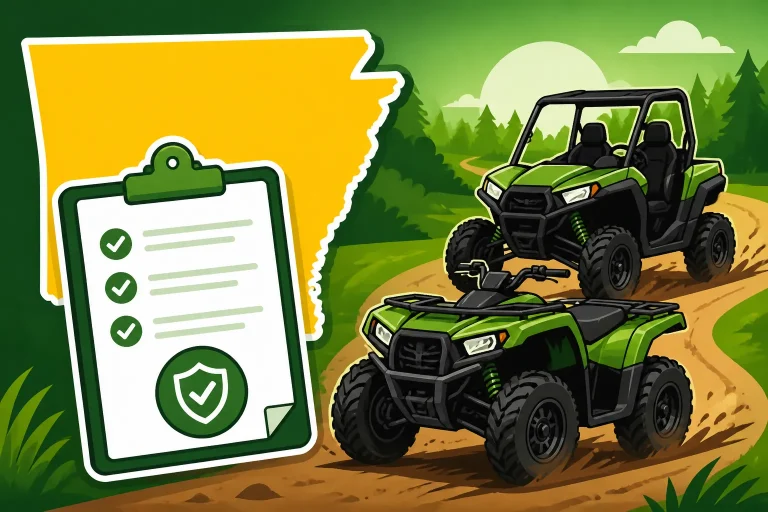
Use this checklist when comparing options:
- Set a clear goal. Decide whether you need basic knowledge, supervised practice, site orientation, or documentation for an operator.
- Check the intended audience. Confirm that the training suits the rider’s age and experience.
- Confirm machine coverage. Ask whether it covers a quad, side-by-side, or both, and whether the rider will train on a similar machine.
- Ask what happens during the course. Find out how much is classroom instruction, demonstration, and supervised practice.
- Verify certificate acceptance if it matters. Ask the specific park, event, rental business, or organization whether it accepts that course.
- Understand equipment needs. Check whether a helmet and other protective gear are supplied or must be brought.
- Plan for additional practice. Leave time to become familiar with the controls before riding challenging terrain.
A provider should be able to explain the course’s purpose and limits in plain language. Be cautious about treating a broad certificate claim as proof that a rider is prepared for every machine or riding environment. Ask what skills are taught, what is assessed, and whether completion means attendance or demonstrated ability.
Families should also consider how the course handles young riders. A child’s ability to understand instruction and control a machine varies, so a course label alone does not settle whether a particular machine is suitable. Review the applicable youth and supervision guidance, and ask the provider what age range its instruction is designed for. A course does not override Arkansas rules or the policies of a riding area.
Getting ready to ride after training
Training is most useful when it changes what a rider does on the trail. Before setting out, review the machine’s owner information, check that it is in safe working condition, and make sure every rider understands the controls and basic communication plan. If the machine is unfamiliar, practice in a controlled, permitted area before moving onto a trail.
Protective equipment matters even when a course does not require a particular item. Check the rules that apply to the riding area and select properly fitting gear. See Arkansas ATV Helmet Requirements for the state-specific helmet topic, and confirm any additional site or rental rules directly with the operator. A training certificate does not replace protective equipment or make a ride risk-free.
For a group ride, agree on a pace that works for the least experienced rider. Keep a safe distance, avoid pressure to follow faster riders, and stop if someone is uncomfortable or the group loses contact. Riders should know where they are going and how to respond if a machine becomes stuck or disabled. On unfamiliar routes, check current access information and conditions before leaving; an open trail can still be unsuitable for a particular rider or machine.
A good course also helps riders recognize when not to continue. Fatigue, poor visibility, deteriorating weather, unfamiliar terrain, and mechanical trouble can all make a ride less safe. Turning around or taking a break is a sound decision, not a failure to complete the route.
Finally, treat course completion as one part of preparation. It can build awareness and skill, but safe riding still depends on following land-access rules, respecting other trail users, using a suitable machine, and making conservative choices. If a park or rental provider has a required orientation, complete that as well. Its local instructions may cover details a general course cannot.
Disclaimer
This article is for general informational purposes only and does not constitute professional advice. Laws, prices and regulations vary by location and change over time. Consult a qualified professional for guidance on your specific situation.