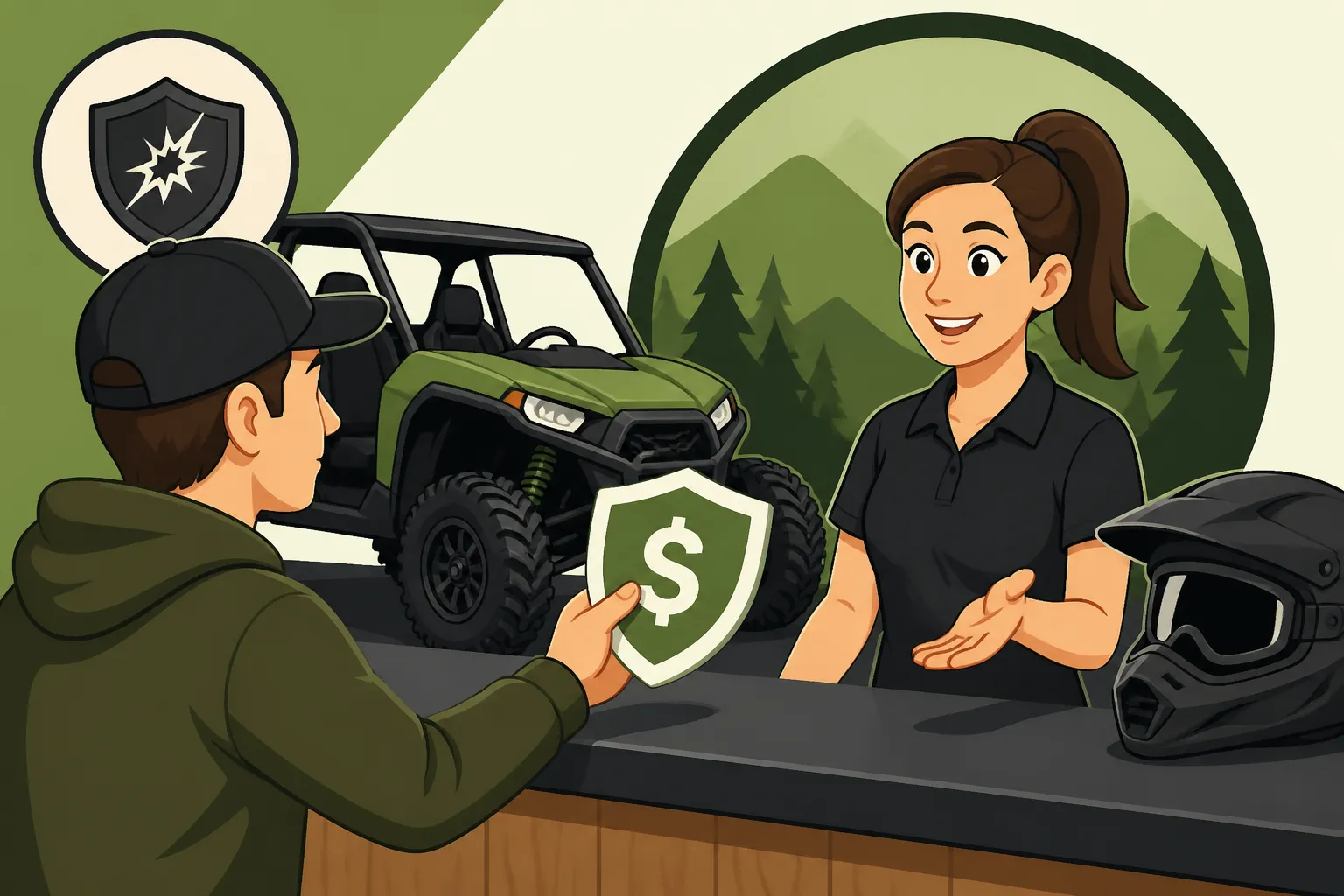
Damage Deposits at a Mena Rental Counter
A damage deposit can make a Mena ATV or side-by-side rental feel more expensive than the quoted rental rate, especially when the shop places a temporary hold on your card. The key is to find out what the charge actually is, what damage you could be responsible for, and how the return inspection works before you sign or ride.
What a damage deposit does and does not cover
Rental shops may use “deposit” to describe different things. It could be money collected in advance, a refundable security deposit, or a temporary authorization on a credit card. These arrangements are not interchangeable. Ask the shop which one applies and get the answer in writing, along with the return conditions.
A deposit is not automatically insurance. It may give the shop a way to collect money for damage, missing equipment, cleaning, or another charge allowed by the rental agreement. Your responsibility for a loss may be greater than the amount held on your card. Conversely, a hold may be released in full if the machine comes back in the condition required by the agreement.
| Term | What it generally means | What to confirm with the shop |
|---|---|---|
| Security deposit | Money collected as security and potentially returned after the rental | When it is returned and what deductions are allowed |
| Card authorization hold | A temporary amount reserved against available credit or funds | How much is held, when the shop releases it, and how your bank processes the release |
| Damage charge | An amount assessed after the shop documents damage or another covered loss | How the charge is calculated and how you can review the supporting details |
| Rental insurance or damage waiver | A product or contract provision that may change your financial responsibility | What it excludes, what deductible or limit applies, and whether it is optional |
The words used at the counter are not enough to determine what you owe. Read the rental agreement and ask for clarification before authorizing a card charge. A damage waiver, if offered, may limit responsibility only under specific conditions. It may not cover every type of damage, every driver, or every violation of the agreement. Ask whether the contract treats the product as insurance, a waiver, or something else, and what conditions apply.
Also distinguish the deposit from the overall cost of a rental. The quoted rental rate may not include every possible expense, such as fuel, tax, a permit, or other charges described by the shop. Ask for an itemized estimate so you can tell what is due up front, what may be held temporarily, and what could be charged after return. For a broader overview, see Arkansas ATV Rental Insurance and Deposits and Arkansas Rental Security Deposits.
A hold can affect your available credit or bank balance even if it is not a final charge. The time it takes to disappear can depend on the rental business’s process and your card issuer’s processing. Ask the shop when it sends a release, but understand that the financial institution may take additional time to reflect it. If the trip budget is tight, allow room for both the rental payment and the held amount. Do not assume that a temporary authorization will be available again as soon as you hand back the keys.
Questions to ask before you authorize a hold
A quick conversation before booking can prevent a frustrating surprise at the counter. Ask the shop to explain the deposit in plain terms and provide the applicable policy before you travel to Mena. If the rental is booked online or by phone, verify that the information still applies to your specific machine and reservation.
Useful questions include:
- Is the deposit a charge or a card hold? Ask whether money will be collected immediately or only reserved on a card.
- How much will be authorized, and when? Confirm the amount for the machine and rental period you booked. Rental terms can vary, so do not rely on another customer’s experience or an old online post.
- Which payment methods are accepted for the hold? A shop may have requirements that differ from those for paying the rental balance. Ask whether the card must be in the renter’s name and whether debit cards are accepted.
- When does the shop release the hold? Find out whether the shop releases it at return or after inspection, and ask what happens if the return occurs outside regular business hours.
- What can be deducted or charged? Ask specifically about physical damage, missing accessories, late return, fuel, excessive mud or cleaning, and towing or recovery. Do not assume every item is included in the deposit.
- Can a charge exceed the deposit? Get a clear explanation of your responsibility if repair costs, missing equipment, or other contract charges are higher than the held amount.
- Is there an optional damage waiver or insurance product? Ask what it changes, what it costs, what exclusions apply, and whether you may decline it. Do not treat a waiver as complete protection unless the written terms support that understanding.
- Who is allowed to drive? Confirm that every intended driver is listed or otherwise approved. A person who is not authorized may create a coverage or contract problem if something happens.
- What should you do after an accident or breakdown? Get the shop’s instructions and emergency contact details before leaving.
- How is a dispute handled? Ask who reviews inspection photos, repair estimates, or damage claims, and how you can request those records.
The agreement controls more than the verbal explanation, so check that the written terms match what the employee told you. If a clause is unclear, ask before signing rather than assuming it will be interpreted in your favor later. You can also compare the shop’s explanations with Arkansas Rental Credit Card Holds, Arkansas Rental Damage Policies, and Arkansas Rental Waiver You Sign.
If the hold is larger than you expected, pause before completing the transaction. Check whether the figure applies to your specific vehicle or if it includes multiple machines or additional equipment. Ask the shop to explain any difference between the amount displayed during booking and the amount requested at pickup. If you cannot meet the payment requirement, discuss options before arriving; do not count on being able to change payment arrangements at the counter.
How to reduce the chance of a damage dispute
A careful check before and after riding is the most practical way to establish what condition the machine was in. Do not rely on memory, particularly when several similar rentals are parked together or the pickup is rushed.
Before leaving the rental location:
- Walk around the machine with an employee. Look at body panels, bumpers, lights, mirrors, tires, wheels, seats, belts, racks, and any accessories included with the rental. For a side-by-side, check doors, seat belts, windshield, roof, and cargo areas.
- Point out existing marks or problems. Ask the employee to note scratches, cracks, loose parts, warning lights, or other concerns on the checkout form. A verbal mention alone may be hard to verify later.
- Take clear photos and a short video. Capture each side, corners, tires, wheels, seats, and accessories. Include close-ups of existing damage and the odometer or other identifying details if the shop permits it. Keep the original files rather than relying only on an edited or shared copy.
- Confirm the included equipment. Check what came with the machine, such as helmets, keys, straps, or other items, and ask how the shop expects them to be returned.
- Ask about operating limits. Know which trails or terrain are allowed, whether water crossings or especially rough sections are prohibited, and what to do if the vehicle becomes stuck. Rental restrictions can be more specific than general trail rules.
- Get the return instructions. Confirm the return location, deadline, fuel expectations, cleaning requirements, and whether an employee must inspect the machine with you.
If you are riding near Mena, make sure the machine is appropriate for the intended route. Width limits, trail conditions, and access rules can affect where you can go. A shop can explain its rental restrictions, but riders should also check current requirements for the riding area. See Arkansas Side-by-Side Rentals Near Mena, Arkansas Rentals and Trail Permits, and Arkansas Trail Conditions Before You Tow.
During the rental, follow the agreement and operate within your ability. A rollover, collision, or mechanical problem can create more than a deposit question: it may involve injury, recovery, repair, and responsibility under the contract. If the machine is damaged or stops working, contact the rental shop promptly and follow its instructions. Do not attempt a repair, arrange a tow, or continue riding if doing so could make the problem worse, unless the shop directs you to do so or immediate safety requires it. Take photos of the scene and the machine when it is safe, and keep any messages or instructions from the shop.
At return, arrange to have the employee inspect the machine with you whenever possible. Walk around together and compare its condition with the checkout notes and photos. Ask the employee to document any new damage and explain what happens next. If the business is closed or staff cannot inspect it with you, photograph the vehicle where and when you leave it, record the return time, and follow the shop’s specified procedure. These steps do not guarantee that no dispute will arise, but they create a clearer record.
Return timing and cleaning expectations matter too. Mud is normal on an off-road trip, but a rental agreement may distinguish ordinary trail dirt from cleaning that requires extra work. Ask what the shop considers acceptable before riding, and avoid trying to wash the machine in a way the rental terms prohibit. Review Arkansas Rental Return Times and Returning a Machine Covered in Grit for related planning.
What to do if the shop claims damage
First, ask the shop to identify the specific damage and show you the checkout and return records. Request photographs, inspection notes, and an explanation of how the amount was determined. Compare those materials with your own photos and the written agreement. A clear, calm request for documentation is more useful than arguing from memory.
If you agree that damage occurred, ask how the contract applies and whether the charge is being deducted from the deposit or charged separately. Request an itemized explanation, including any repair or replacement estimate used to set the amount. A deposit is not necessarily a cap on your responsibility, so check the contract before assuming the held amount settles the matter.
If you disagree, explain the reason in writing and attach relevant photos, messages, or checkout notes. Keep the discussion focused on verifiable details: when the damage was recorded, whether it appears in the pickup photos, and what the agreement says. Save copies of the rental contract, payment record, inspection forms, and communications until the issue is resolved.
If the shop has already placed a final charge on your card, ask the business about its review or dispute process. You can also contact your card issuer to ask what options are available under its procedures. A card issuer’s process is separate from the rental agreement, and beginning a payment dispute does not automatically settle questions about contractual responsibility.
For future rentals, compare the full terms rather than choosing only by the advertised rate. A slightly different deposit process may matter less than clear damage documentation, straightforward return procedures, and a contract you understand. Before booking, confirm the machine, authorized drivers, payment method, hold, damage terms, and what the shop expects if an accident or mechanical issue occurs. That preparation makes the counter conversation quicker and gives you a better record if the final inspection raises a question.
Disclaimer
This article is for general informational purposes only and does not constitute professional advice. Laws, prices and regulations vary by location and change over time. Consult a qualified professional for guidance on your specific situation.