Arkansas Private Park Pet Rules
Arkansas private off-road parks set their own pet policies, so “pets allowed” may not mean a dog can ride along on a machine or follow you onto every trail. Check the rules before booking, then plan for heat, noise, traffic and shared campsites. A little preparation can prevent a denied check-in or a stressful day for your pet.
Check the park’s pet policy before you go
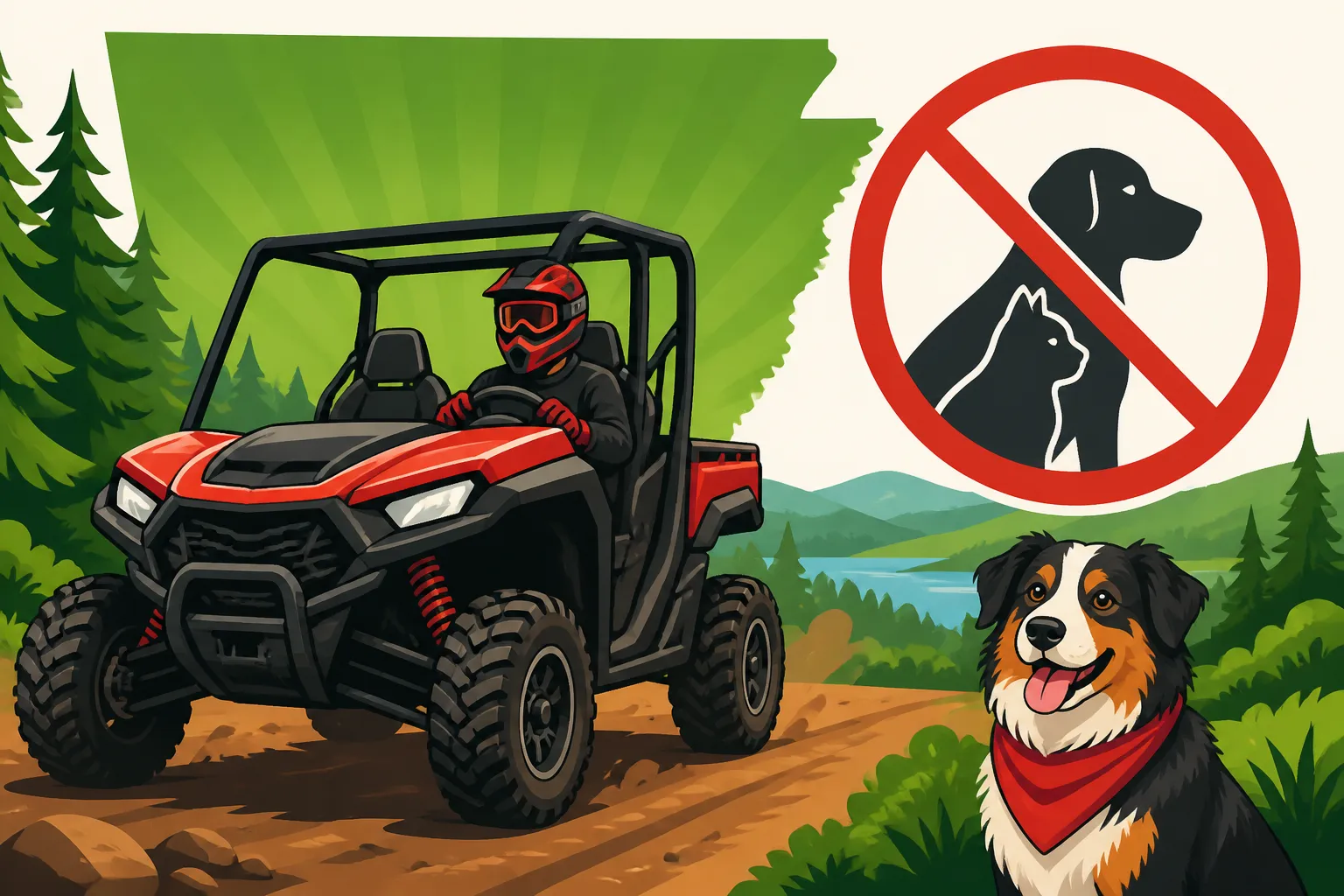
There is no single pet rule that applies to every private ATV and UTV park in Arkansas. Each operator can set conditions for animals on its property, and those conditions may differ between riding areas, campsites, cabins and other facilities. A park may allow dogs in a campground but prohibit them on trails, or allow pets only if they stay leashed and attended.
Start with the park’s current written rules, but confirm details directly if anything is unclear. Policies can change, and a general statement such as “pet-friendly” may leave out restrictions that matter to your trip. Ask the park rather than assuming that permission to bring a pet also means permission to take it everywhere.
Useful questions include:
- Are pets allowed anywhere on the property, or only at designated campsites?
- Can a pet accompany you in a side-by-side or ATV?
- Are pets allowed on trails, at trailheads, or in common buildings?
- Must pets be leashed, and are there leash-length or restraint requirements?
- Are there limits on the number, size or type of animals?
- Are pets allowed in cabins, and does the cabin have different rules?
- Are there extra cleaning, deposit or damage conditions?
- What should you do if your pet becomes distressed or escapes?
Request the answer for your specific reservation and machine setup. If the policy is explained by phone, write down the relevant details and the date you confirmed them. That gives you a clear point of reference if staff interpret a general policy differently when you arrive.
| Policy area | What to confirm | Why it matters |
|---|---|---|
| Trails and riding areas | Whether pets may enter and whether they can ride on a machine | Trail access and vehicle transport are separate questions |
| Campsites | Leash, supervision and waste rules | Campsites are shared spaces with people, machines and other animals |
| Cabins | Whether pets are accepted and what conditions apply | A park’s campground rules may not cover indoor lodging |
| Common facilities | Whether pets may enter stores, bathhouses or gathering areas | Access may be restricted even if pets are allowed elsewhere |
| Supervision | Whether pets may be left alone and for how long | Noise, heat, escape and damage can become problems quickly |
| Charges and cleanup | Whether extra costs or cleaning conditions apply | A pet-friendly booking may still carry specific responsibilities |
The park’s general visitor rules are worth checking alongside its animal policy. Arkansas Private Park Waivers and Rules can help you understand the broader conditions you may be asked to accept. If your stay includes a campsite or cabin, review Arkansas Private Park Camping Rules as well; lodging rules can be distinct from trail rules.
If a pet is not allowed on the trail, do not treat that as a minor detail to negotiate at check-in. The operator may have made the restriction for safety, wildlife, sanitation or visitor comfort. Arrange care for your animal or choose a park and lodging setup that clearly fits your needs.
Decide whether the ride is suitable for your pet
Even where a park permits pets, that does not necessarily make an ATV or UTV ride appropriate for every animal. A loud engine, sudden acceleration, vibration, dust, heat and unfamiliar surroundings can be upsetting or physically risky. A pet that is calm in a car may react very differently beside a line of off-road machines.
Do not assume you can safely carry a pet loose on a quad, in the driver’s area of a side-by-side or in a cargo bed. A loose animal can distract the driver, interfere with controls, jump out or be injured during a stop or rollover. A pet carrier or restraint is not automatically safe just because it fits in the vehicle. If the park allows animals to ride, ask what types of restraint it requires and assess whether the setup is suitable for your particular pet and machine.
For many trips, the safer choice is to leave the pet at home with a reliable caregiver. If that is not possible, ask whether the park offers pet-appropriate lodging or a supervised place away from the riding area. Never leave an animal in a parked vehicle as a substitute for supervision. Conditions can become dangerous quickly, even when the vehicle is shaded or a window is partly open.
Before deciding, consider the animal’s temperament, health, age and experience with noise and crowds. A pet that is frightened by unfamiliar people or other animals may struggle at a busy trailhead. A dog that bolts after wildlife can create risk for itself, riders and other visitors. A small, quiet animal may still be vulnerable to dust, heat or accidental contact with a moving machine.
If the park confirms that pets can be on the property but not on the trails, make a realistic plan for where the animal will stay while you ride. Consider whether a responsible adult will remain at camp, whether the pet can settle safely in an approved lodging area, and whether you can return often enough to check on it. If no suitable supervision is available, bringing the pet may not be workable.
Keep the pet away from moving machines
Trailheads and staging areas deserve extra attention. Riders may be starting, loading, unloading or backing trailers, sometimes with limited visibility. Keep your pet well away from vehicle paths and secure it before unloading machines. Do not tie a leash to a trailer, ATV, UTV, campsite fixture that could move, or anything that may expose the animal to traffic.
Agree on a simple routine with everyone in your group: one person holds the leash, the animal stays clear of the machine, and no one starts or moves a vehicle until the area around it is checked. This is especially useful when children are helping. The pet should not be allowed to wander between parked machines or greet unfamiliar riders without permission.
A helmet, seat belt or other protection required for riders does not resolve the separate question of pet safety. For visitor rules that apply to riders, review Arkansas Private Park Helmet Rules. Keep those requirements distinct from the park’s pet policy and from your own decision about whether the animal should travel.
Plan for campsites, cabins and shared spaces
A pet permitted at a park still needs to be managed around other visitors. Some guests may be afraid of dogs, have allergies, or be travelling with animals that do not mix well. A leash, close supervision and prompt cleanup help reduce conflict, but follow the park’s specific conditions if they are stricter.
At a campsite, choose a secure place for the pet that is away from vehicle movement, cooking equipment and neighboring sites. Keep the animal leashed if required, and do not let it roam into another campsite. Before letting a dog approach another visitor or animal, ask first. Friendly behavior is not a substitute for the other person’s consent or the park’s rules.
Do not leave a pet unattended unless the park explicitly allows it and you have a safe arrangement. An animal left alone may bark, scratch at a cabin door, chew equipment or become anxious around engine noise. A leash or crate can help only if it is suitable for the pet, allowed by the park and used in a safe location. Never leave an animal restrained where it could become tangled, overheated or exposed to moving vehicles.
Waste disposal is part of being a responsible guest. Bring bags and use the park’s designated disposal method. Do not leave waste on a trail, at a campsite or beside a road. Keep food and pet supplies secured so they do not attract wildlife or create a mess that affects neighboring visitors.
Cabins require a separate check. Ask whether pets are allowed inside, whether they must stay off furniture or beds, and whether there are specific cleanup or damage conditions. Do not assume a pet can be left alone in the cabin while you ride. If the park permits that arrangement, clarify how the pet must be contained and how staff can reach you if there is a problem.
Quiet hours matter, too. A dog that reacts to voices, other pets or late-night arrivals can disturb the campground even if it is otherwise well behaved. Check [Arkansas Private Park Quiet Hours] and ask what the park expects if an animal is noisy. Plan breaks, exercise and supervision around the park’s schedule rather than assuming that a pet can be left to settle without attention.
For camping-specific questions about bringing a dog to a riding area, Dogs at an Arkansas Trailhead Camp offers related considerations. The details of a trailhead camp may not be identical to a private park’s rules, so use it as a planning reference, not permission to ignore the operator’s policy.
Prepare a practical pet plan for the visit
Once you have confirmed the rules, decide what your pet needs and who will be responsible for it throughout the day. A plan should cover arrival, unloading, riding time, meals, rest, waste and emergencies. If more than one person is in your group, name one person to manage the animal at each stage rather than assuming someone will notice when it needs attention.
A basic preparation list may include:
- A secure leash and properly fitted collar or harness
- Identification with current contact details
- Water and a bowl
- Food and any necessary medication
- Waste bags and a way to dispose of them
- A familiar bed, mat or crate if the park allows one
- Shade and a safe resting area
- A phone number for the park and a plan for contacting your group
- A plan for veterinary care if the animal becomes ill or injured
If you need to replace a leash, portable bowl or cleanup supplies before leaving, Amazon can be one place to compare options. Check sizing, fastening and suitability for the animal rather than choosing gear based only on appearance. A product listing cannot confirm whether a park permits a particular restraint or whether it is safe for a pet in a vehicle.
Pack for the conditions, not just the drive. Dust, mud, rain and temperature changes can affect an animal differently from a rider. Bring enough water and make sure the pet has a quiet place away from exhaust, traffic and the trail. If the animal shows signs of distress, do not continue to expose it to the activity simply because the reservation is paid for.
Before setting out, check the park’s current operating information and confirm that the relevant riding area is open. If you are deciding between private parks, Arkansas Private Park Insurance Rules is another part of the visitor policy worth reviewing, though it does not replace a direct answer about animals. For help choosing a riding destination and understanding what different locations offer, see Arkansas ATV Trails: Where to Ride.
Use this final check before leaving:
- Confirm the pet policy for trails, campsites, cabins and shared facilities.
- Confirm whether the pet may ride in a machine and what restraint is required.
- Identify who will supervise the pet while the group rides.
- Pack water, food, medication, identification and waste supplies.
- Plan a safe way to unload and keep the pet clear of moving machines.
- Make a backup plan if the pet cannot enter the riding area or becomes distressed.
If the park’s answer is unclear, get clarification before you travel. If the policy does not fit your animal’s needs, arrange care elsewhere or select a different trip. That is more reliable than arriving with a pet and hoping the rules can be changed.
Disclaimer
This article is for general informational purposes only and does not constitute professional advice. Laws, prices and regulations vary by location and change over time. Consult a qualified professional for guidance on your specific situation.