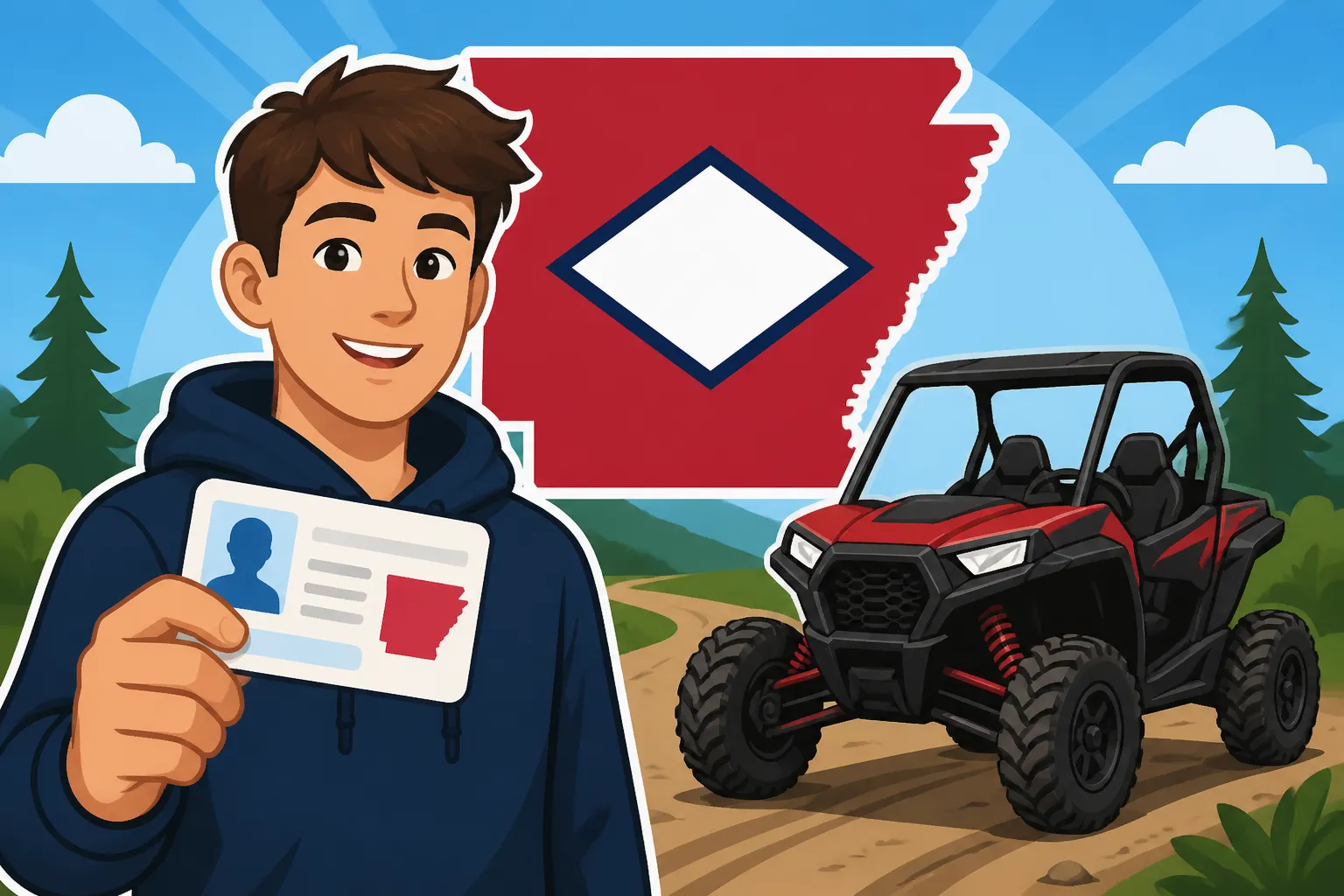
Arkansas Driver’s License at 16 for Street UTVs
For folks in Arkansas, the dream of taking their UTVs from the trail straight to the general store or a friend's house has become more of a reality in recent years. But if you've got a teenager eager to get behind the wheel of a street-legal side-by-side, it brings up a whole new set of questions, especially concerning driver's licenses. This guide is here to untangle the requirements for young Arkansans wanting to operate a street-permitted UTV, focusing specifically on the 16-year-old driver's license rule and everything that comes with it.
The Basics: Why a Driver's License Matters for Street-Legal UTVs in Arkansas
It's one thing to drive your UTV on your own property or a designated off-road park, and quite another to take it out on city streets where cars, trucks, and other traffic operate. The rules shift dramatically once you leave private land, and the biggest shift involves who can actually drive these machines.
What "Street Legal" Really Means for UTVs
When we talk about a UTV being "street legal" in Arkansas, it's important to understand this isn't a blanket state-wide rule. For a long time, the state generally prohibited ATVs and UTVs from public roads. This was a source of great frustration for riders who just wanted to bridge a short gap between trails or run a quick errand without trailering their machine.
However, recent legislative changes have empowered individual cities and towns across Arkansas to create their own ordinances, allowing UTVs on certain municipal roads. This means "street legal" is defined on a city-by-city basis. It's a fantastic development, opening up new avenues for enjoyment and convenience, but it also means a patchwork of regulations. One town might have very lenient rules, while a neighboring one could be much stricter, or even ban UTVs entirely from its streets. This local control is why you'll often hear about specific city ordinances, like those in Bono, and why it's crucial to check local laws before you ride. For more details on this, you might want to read [Arkansas UTV Street Legal Rules by Town].
Essentially, when a city decides to permit UTVs on its streets, it's generally treating them more like traditional motor vehicles for the purpose of road use. This comes with responsibilities, safety requirements, and, yes, driver licensing rules. It’s not just about bolting on a few accessories; it's about integrating these machines into the existing traffic ecosystem safely and legally.
Arkansas's Stance on UTVs on Public Roads
Historically, Arkansas's state law has been clear: ATVs and UTVs are generally not allowed on public roads. This blanket prohibition was in place to ensure safety, as these machines are designed for off-road use and don't always have the safety features or handling characteristics of street-legal vehicles. This often led to tickets for riders who simply wanted to cross a highway or access a gas station from a nearby trail.
However, Act 922, passed by the Arkansas legislature, was a game-changer. It explicitly gave local municipalities the authority to pass ordinances allowing UTVs on certain city streets. This was a significant win for the UTV community, recognizing the growing popularity and utility of these machines. But it's vital to remember that the default state law still prohibits UTVs on roads unless a specific local ordinance overrides it. This means if your town hasn't passed such an ordinance, or if you're outside city limits, the general prohibition still applies, with a few very specific exceptions for things like farming operations or direct crossings. Understanding this distinction is key to staying out of trouble. It's also worth noting that cities like Cotter have chosen not to allow UTVs on their streets, so the local choice isn't always "yes." The details of how this came about are explained further in [How Arkansas Cities Got the Choice on UTVs].
When a city does pass an ordinance, it often comes with a set of conditions that transforms the UTV from a purely recreational off-road machine into something that can coexist with other traffic, at least on specific roadways. This includes equipment requirements, speed limits, and, crucially, driver licensing rules.
Age and Licensing: The 16-Year-Old Requirement for UTV Drivers
So, you're in a city that allows street-legal UTVs. That's great! But who can actually drive them? This is where the standard rules of the road start to apply, particularly when it comes to age and driver's licenses.
The Minimum Age for Operating a Street-Permitted UTV
For anyone hoping to drive a street-permitted UTV on Arkansas city roads, the minimum age is 16 years old. This aligns directly with the standard age requirement for obtaining a Class D driver's license in Arkansas, which allows you to operate regular passenger vehicles. It's a sensible requirement, as operating any vehicle on public roads, even a UTV that might feel more recreational, demands a certain level of maturity, judgment, and understanding of traffic laws.
This isn't like riding a dirt bike on private land where age rules might be more flexible or dependent on parental supervision. When you're sharing the road with cars, trucks, and pedestrians, the stakes are much higher. A 16-year-old driver has typically gone through some form of driver education, has experience with traffic rules, and has demonstrated a basic competency behind the wheel. This experience is deemed necessary to safely navigate a UTV in a mixed-traffic environment. For parents of younger teens eager to drive, it's important to manage expectations and explain that while their UTV might be "street legal," the driver must also be "street legal" by meeting the standard licensing age. For broader rules on younger riders, see [Arkansas ATV Age Rules for Young Riders].
The Type of License You'll Need
To legally operate a street-permitted UTV on designated city streets in Arkansas, you'll generally need a valid Class D driver's license. This is the standard license held by most motorists in the state for operating non-commercial passenger vehicles. You won't typically need a special endorsement, like those required for motorcycles (Class M), nor will you usually need a commercial driver's license (CDL).
It’s crucial to understand that a learner's permit, or provisional license, is often not sufficient for independent operation of a street-permitted UTV on city roads. While a learner's permit allows supervised driving practice in a car, city ordinances for UTVs typically require a full, unrestricted driver's license. This means the driver must have passed all necessary tests and received their permanent license. This again reinforces the idea that street-legal UTVs are treated similarly to other vehicles once they hit the pavement. Always check your specific city's ordinance, as local rules can sometimes have unique stipulations, but the Class D license is the most common requirement. In addition to the driver's license, the UTV itself will need to be permitted by the city, often involving an annual fee. You can learn more about these city permits in [Arkansas UTV Street Permits and Annual Fees].
Beyond the License: Other Requirements for Street UTVs in Arkansas Cities
Having a valid driver's license is just one piece of the puzzle when it comes to making your UTV street legal and getting your 16-year-old behind the wheel. The machine itself needs to be equipped to meet specific safety standards that allow it to operate safely alongside regular traffic.
Essential Equipment for Street Legality
When a city decides to allow UTVs on its streets, it almost always includes a list of mandatory equipment that must be installed on the machine. This isn't just about looking good; it's about making the UTV visible, controllable, and predictable to other drivers and pedestrians. Think of it this way: your UTV needs to be able to signal its intentions and be seen, just like a car.
Here’s a typical rundown of essential equipment you’ll need:
- Headlights: Must be operational and provide adequate illumination, especially for riding after dark, if permitted by the ordinance.
- Taillights and Brake Lights: Crucial for being seen from behind and clearly indicating when you are slowing down or stopping.
- Turn Signals: Absolutely vital for indicating turns or lane changes. Brands like SuperATV are well-known for offering aftermarket turn signal kits that are specifically designed for UTVs, making the conversion much easier. You’ll want bright, visible signals both front and rear. For more on this, check out [Arkansas Turn Signal Requirements for Street UTVs].
- Horn: A working horn is necessary to alert others to your presence or to avoid potential hazards.
- Mirrors: You’ll need at least one rearview mirror, and often two (one on each side), to give the driver a clear view of traffic behind and to the sides. This is another area where SuperATV offers quality aftermarket options for UTVs. Detailed requirements are available in [Arkansas Turn Signals and Mirrors on a UTV].
- Windshield: While not always required for ATVs, many UTV ordinances mandate a windshield. This protects the driver and passengers from debris and wind, similar to a car.
- Seat Belts: All occupants must be wearing factory-installed seat belts.
- Tires: Must be non-highway tires, as defined by Arkansas statute, if riding in specific designated areas. However, for street use, many UTVs will already have tires suitable for pavement.
This list isn't exhaustive for every single city, so always consult your local ordinance. But these items form the foundation of making your UTV safe and legal for road use. Without these modifications, even with a valid driver's license, your UTV is not considered street legal.
Insurance and Registration for Road Use
Just like a regular car or truck, if you're going to drive your UTV on public roads in an Arkansas city, you absolutely must have insurance. This isn't just a suggestion; it's a legal requirement designed to protect you and others in case of an accident. The insurance policy typically needs to meet the state's minimum liability requirements, covering bodily injury and property damage. Many standard ATV/UTV insurance policies might cover off-road use, but you'll need to confirm with your insurance provider that your policy extends to street-legal operation on public roads, as this is a specific rider often required. It's a critical step that many people overlook, but getting caught without proper insurance can lead to hefty fines and other legal consequences. You can find more specific details on this topic at [Arkansas Insurance for a Street-Permitted UTV].
Beyond insurance, your UTV will also need to be registered or permitted by the specific city that allows its street use. This isn't the same as the state's one-time ATV registration and decal that allows off-road use; this is a city-specific permit. These city permits often come with an annual fee and may require an inspection to ensure your UTV meets all the equipment requirements discussed above. Once approved, you'll usually receive a sticker or decal to display on your UTV, signifying that it's permitted for street use within that municipality. Remember, this city permit is only valid within the boundaries of that particular city. If you drive into a neighboring town that doesn't have an ordinance or where you haven't obtained a permit, you could be in violation of the law. For information on the costs associated with these permits, check out [Arkansas UTV Street Permit Cost in a City].
Here's a quick summary of these essential requirements:
| Requirement | Description | Example Provider/Benefit |
|---|---|---|
| Driver's License | Must be 16 years old and hold a valid, unrestricted Class D driver's license. | Ensures driver has basic road knowledge and experience. |
| Equipment | Headlights, taillights, brake lights, turn signals, horn, mirrors, windshield, seat belts. | SuperATV offers quality aftermarket parts like turn signal kits and mirrors. |
| Insurance | Mandatory liability insurance meeting state minimums, specifically covering street-legal UTV operation. | Protects against financial burden in case of an accident. |
| City Permit/Reg. | Annual permit issued by the specific city allowing UTVs on its streets, often requiring an inspection. | Validates UTV meets local standards and allows legal operation within city limits. |
| Width & Speed | UTV must adhere to local width restrictions (e.g., often 80 inches) and maintain posted speed limits. | Prevents oversized machines on narrow streets and promotes safe speed adherence. |
Navigating Local Ordinances and Their Nuances
The phrase "street legal" for UTVs in Arkansas is less about a single state rule and more about a patchwork of local decisions. This means that while the general age requirement for a driver's license might be consistent, almost everything else can change from one town to the next.
The Importance of Checking Your Specific City's Rules
This cannot be stressed enough: you must check the specific ordinance of the city you plan to ride in. Just because Bono allows street-legal UTVs doesn't mean every other town in Arkansas does, or that they have the same rules. For instance, some cities might allow UTVs on all streets posted under a certain speed limit (like 35 mph or 55 mph), while others might explicitly exclude major thoroughfares or state highways that run through town.
Local ordinances also dictate things like maximum width. Many cities adopt an 80-inch width cap for UTVs to ensure they can safely share lanes with other vehicles and fit within road infrastructure. This is a common limit, and machines wider than this might not qualify for a city permit. Details on this can be found in [An 80-Inch Width Cap in Local Rules]. Some towns might restrict UTVs to specific hours of the day or have unique requirements for displaying the city permit sticker. The varying nature of these rules means that what's legal in Hot Springs might be illegal in Fayetteville. Before you or your 16-year-old rider venture out, make a phone call to the city clerk's office or check the city's official website. Getting familiar with your town's specific ordinance is critical, and there’s a good resource in [Reading Your Town's Ordinance Before You Ride]. It’s not just about avoiding a ticket; it’s about ensuring everyone’s safety on the road.
What Happens If You Don't Comply?
Ignorance of the law is never an excuse, especially when it comes to operating a vehicle on public roads. If your 16-year-old is caught operating a UTV on city streets without a valid driver's license, without the required city permit, or without the necessary safety equipment, the consequences can range from inconvenient to severe.
Firstly, you can expect a citation, which means fines and potentially court costs. These aren't cheap and can add up quickly. A deputy or police officer might also impound the UTV, leaving you with the headache and expense of retrieving it. Beyond the immediate financial impact, there could be points added to your driving record, potential insurance premium increases, and even a suspension of driving privileges for the young driver. In more serious cases, especially if an accident occurs, you could face reckless endangerment charges or other criminal penalties.
Consider a scenario where a 16-year-old, excited about their UTV, takes it on a street in a town without a UTV ordinance, or without the required equipment. A simple traffic stop could quickly escalate. The UTV might be impounded, a hefty fine issued for illegal road use, and the driver could face charges for operating a vehicle without proper authorization. It's a risk simply not worth taking. Understanding these potential outcomes, which are further detailed in [Arkansas Penalties for Illegal Road Riding] and [Arkansas Court Costs for a Riding Citation], really underscores why adherence to every single rule is so important.
Preparing a Younger Rider for Street UTV Responsibilities
While the freedom of riding a UTV on city streets can be exciting, it comes with significant responsibilities, especially for younger drivers. It's not just about knowing the rules; it's about developing the judgment and skills to drive safely.
Emphasizing Safety and Defensive Driving
Driving a UTV on city streets is a different experience than driving a car or truck. UTVs often have a higher center of gravity, different braking characteristics, and can be more susceptible to crosswinds. They might also accelerate differently than a family sedan. For a 16-year-old who might be a relatively new driver in any vehicle, these differences need to be clearly understood and respected.
Parents and guardians play a crucial role here. It's not enough to just hand over the keys once the license and permits are in order. Emphasize defensive driving techniques: scanning the road ahead, anticipating other drivers' actions, maintaining safe following distances, and being hyper-aware of blind spots, especially for larger vehicles. Remind them that while their UTV might feel powerful, it's often smaller and less visible than other vehicles on the road. Reflective tape, bright clothing, and proper use of lights are all important for increasing visibility.
Also, discuss the importance of avoiding distractions. No texting, no loud music that drowns out traffic sounds, and no horseplay. The road is a serious place, and a moment of inattention can have severe consequences. Even though Arkansas doesn't have a mandatory ATV safety course for all riders, encouraging one for a young street-legal UTV driver is a smart move. These courses often cover safe riding practices, risk assessment, and basic maintenance, all of which are invaluable.
Practical Steps for New Street UTV Drivers
Beyond theoretical safety discussions, there are practical steps you can take to ensure a 16-year-old is truly ready for street-legal UTV operation.
First, practice, practice, practice. Start in a controlled environment, even if it’s just a large empty parking lot, to get comfortable with the UTV's specific handling on paved surfaces. Practice braking, turning, and understanding its acceleration. Then, gradually move to low-traffic city streets, always with an experienced adult co-pilot, even if not legally required, until confidence and competence are high.
Second, understand the machine's limits. Teach them about the UTV’s payload capacity, towing limits (if applicable), and how passengers affect handling. A UTV loaded down with gear or too many passengers will handle very differently than an empty one. Also, discuss speed limits. Just because a UTV can go 50 mph doesn't mean it should be driven that fast on a 35 mph city street, especially if its tires are designed primarily for off-road use.
Third, routine maintenance checks. Teach them how to check tire pressure, fluid levels, and ensure all lights and signals are working before each ride. A simple pre-ride inspection can prevent a breakdown or a safety hazard. This fosters responsibility and mechanical awareness. While not mandatory for street-legal UTVs, taking a general ATV/UTV safety course can provide invaluable training on these points and more. Resources like [Arkansas Safety Courses That Are Voluntary] can help you find options. Investing in quality gear, including appropriate helmets (even if not strictly legally required for UTVs, it's always a good idea) and eye protection, should also be a priority for any rider, especially a younger one.
Disclaimer
This article is for general informational purposes only and does not constitute professional advice. Laws, prices and regulations vary by location and change over time. Consult a qualified professional for guidance on your specific situation.