Paddling the Mulberry Between Rides
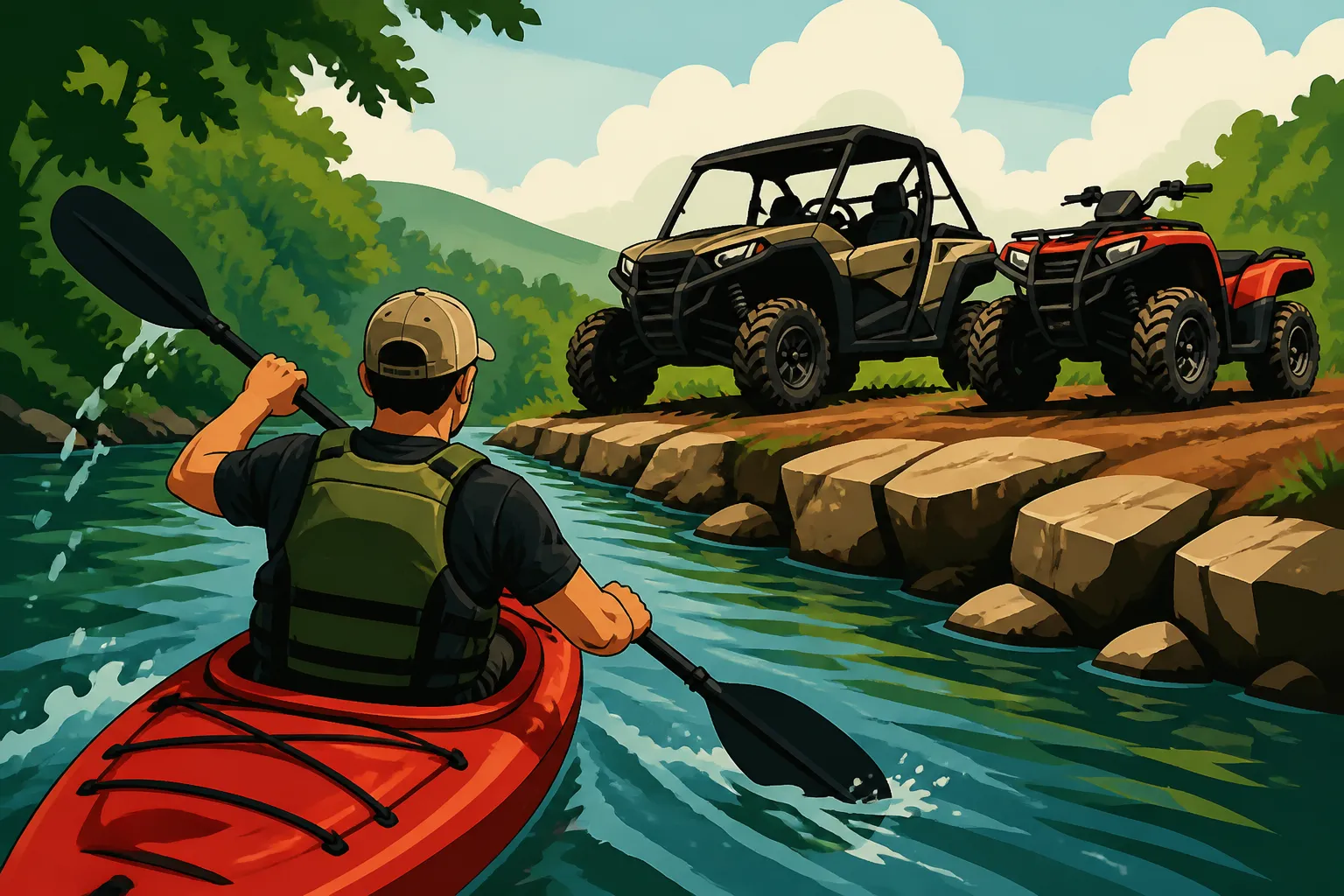
A ride through the Ouachita foothills can leave you dusty, tired, and ready for a different kind of afternoon. Near Ozark, Arkansas, the Mulberry River offers a chance to trade trail bumps for a paddle—but river conditions, access, and timing matter. This guide explains how to plan a safe, practical river break between ATV or UTV rides.
Why pair a Mulberry River float with an off-road trip
A change of pace beside the trail country
The Mulberry River runs through a scenic part of the Arkansas Ozarks, where wooded hills, rocky banks, and changing water levels make a float feel very different from a day on a machine. For riders staying near Ozark or using a nearby private riding area, paddling can be a relaxing way to round out a trip. It is not simply another activity to squeeze in between trail loops, though: river conditions and the time required for a float should shape the day’s plan.
Byrd’s Adventure Center is a well-known starting point for combining outdoor activities in the area. If you are considering a stay or ride there, check the current activity options and river arrangements directly before you travel. The river, the trails, and the facilities are separate parts of your outing, so confirm which access points and services are available for your particular plans. For more background on the area, see Byrd’s Adventure Center on the Mulberry River and Arkansas Riding on the Mulberry River.
The best version of a multi-activity day usually has some breathing room. Rather than finishing a demanding ride and immediately rushing to launch a boat, consider scheduling the float for a separate morning or afternoon. That gives you time to eat, change clothes, check water conditions, and avoid making decisions while tired. If your group would rather keep the trip simple, choose one main activity for the day and treat the other as a flexible extra.
Decide what kind of trip you want
A river float can mean a quiet paddle, a family outing, or a more active stretch of moving water. Those are not interchangeable experiences. The right choice depends on current conditions, the comfort and experience of everyone in your group, and the type of boat you plan to use. A novice paddler may be happiest with a calm, manageable section and a companion who knows river basics. A more experienced group may be comfortable with a livelier float, but should still check conditions and plan a suitable take-out.
Think about how the river outing fits into your ride plans. If you are hauling your own ATV or UTV, you may also be transporting boats, paddles, life jackets, dry bags, and spare clothing. That is a lot of gear to organize at a busy staging area. If you are renting a machine, ask the rental provider whether transporting river equipment is permitted and whether there are any restrictions on where the machine can be taken. Do not assume that a trail rental includes river access, a shuttle, or permission to use a vehicle on a riverbank.
A float can also be a welcome reset for people in a mixed-ability group. One person might enjoy a longer ride while another prefers to spend time near the water. Make the plan explicit before anyone heads off: agree on meeting points, times, communication options, and what happens if weather or water conditions change. Cell service can be unreliable in some wooded and hilly areas, so a plan that depends entirely on a phone call may not be enough.
Plan the float around water, weather, and access
Check conditions before you commit
The Mulberry’s character can change with rainfall and water level. A stretch that feels gentle under one set of conditions may be faster or more difficult after rain. Water may also rise, become murkier, or carry more debris. Before launching, get a local assessment of the section you intend to paddle and whether it is appropriate for your group’s experience. If a local outfitter or site operator provides current guidance, use it rather than relying on an old trip report or a general description of the river.
Weather matters beyond the chance of rain. A storm upstream can affect water even if the sky above your launch point looks clear. Thunderstorms, strong wind, heat, and falling temperatures can all change the comfort and safety of a float. If the forecast or local conditions are uncertain, postponing the paddle is a sensible choice, not a wasted trip. Similar caution applies to trail plans: Arkansas Trail Conditions Before You Tow and Arkansas Trail Closures After a Storm are useful topics to review when rain is part of the forecast.
Ask practical questions before setting out: Is the planned section currently suitable for your group? Where are the launch and take-out points? How long should you allow? Is a shuttle available, or will your group need to arrange its own? Are there access rules or parking limits? These details can determine whether a float is straightforward or turns into an awkward scramble to recover vehicles and gear.
| Planning question | Why it matters | What to do |
|---|---|---|
| What are current river conditions? | Rain and changing water levels can alter the difficulty of a section. | Ask a local operator or knowledgeable local contact before launching. |
| Where are the launch and take-out points? | You need a workable plan for people, boats, and vehicles at both ends. | Confirm exact access and parking arrangements in advance. |
| How will the shuttle work? | A one-way float requires a plan to return to the launch point. | Arrange a shuttle or a suitable vehicle plan before you put in. |
| Is the section right for every paddler? | Experience and comfort levels vary within a group. | Choose a route that matches the least experienced person. |
| What will you do if conditions change? | A flexible plan helps prevent pressure to launch when it is unwise. | Identify an alternate activity or a clear reason to cancel. |
Confirm legal and practical access
A river beside a trail area does not mean every bank, parking space, or access road is open to the public. Land ownership and access rules can vary along a route. Use established access points and follow posted signs. Do not drive an ATV or UTV onto a riverbank, through a campground, or along a service road unless that use is expressly allowed. A machine’s ability to reach a spot does not establish permission to go there.
If you are staying at a private park or recreation property, ask the operator how river access works. Confirm whether boats can be launched from the property, whether you need to transport them elsewhere, and where vehicles may be parked during a float. For a stay that includes a place to sleep, compare the facilities and access details in Arkansas Off-Road Parks With Cabins and Arkansas Off-Road Parks With RV Hookups. Verify the specific arrangements with the property rather than assuming that lodging includes river privileges.
Keep your trail and river maps separate in your planning. onX Offroad can help you prepare for the riding portion of a trip, such as identifying your planned route and keeping track of where you intend to stage. It should not replace confirmation of river access, local rules, or current water conditions. Likewise, do not treat a trail map as proof that a road or riverside area is open to public use. Check boundaries and access with the relevant land manager or property operator.
Pack for two different kinds of outdoor day
Keep river gear dry, reachable, and separate
Trail clothes and river clothes serve different purposes. Dusty riding gear can be uncomfortable in a boat, while wet clothing can become a problem if the temperature drops or the wind picks up. Pack a dry change of clothes in a waterproof bag, along with a towel and footwear suitable for walking on wet or uneven ground. Store keys, phones, and other essentials in secure dry storage rather than loose in a pocket or open cargo area.
Every paddler should have a properly fitting, appropriately rated personal flotation device and wear it on the water. Bring a paddle suited to the boat, drinking water, sun protection, and a small first-aid kit. A whistle and a way to keep essential items secured are useful additions. Do not count on a cooler, inflatable toy, or improvised float as safety equipment. If you are borrowing or renting a boat, confirm what safety gear is provided and what your group must bring.
For the riding part, organize gear before you leave home. Helmets, eye protection, gloves, appropriate footwear, and a basic repair kit belong with the machine, not mixed into wet river bags. Use separate bins or bags so that mud and water do not soak the items you need later. If the area has wash facilities, check when and where they can be used; Arkansas Riding Areas With Wash Stations can help you think through that detail when comparing trip options.
Leave time for food, cleanup, and fatigue
Both riding and paddling take energy, especially in warm weather. Plan regular water and food breaks rather than waiting until someone feels worn out. People sometimes underestimate how tiring a float can be because they imagine sitting in a boat as restful. Paddling, carrying boats, getting in and out at uneven banks, and managing sun exposure can add up. A long ride beforehand makes that fatigue easier to miss.
Build time into the day for loading and unloading. A float often requires more coordination than simply walking back to a parked machine: boats and paddles need to be secured, people need dry clothes, and a shuttle may need to return to the launch point. If you are riding again after the paddle, make sure the group has enough daylight and energy for a safe, unhurried return. Do not let a reservation, a packed itinerary, or the effort already spent getting there pressure anyone into continuing when they are exhausted.
Heat and rain deserve special attention in Arkansas. In hot weather, drink water consistently, seek shade when available, and be alert to signs that someone is overheating. In wet or cooler conditions, have a warm, dry layer ready for after the float. Arkansas Riding in Summer Heat and Arkansas Riding in Spring Rain offer useful planning perspectives for the trail portion of a trip, while the same weather awareness helps you decide whether a river outing still makes sense.
Make a flexible itinerary that respects the place
Give each activity its own time window
A practical itinerary starts with the activity that has the least flexibility. If river conditions are best early in the day, plan around that and fit in riding later only if the timing works. If the trail area has access hours, a reservation, or other operating rules, make those the fixed points instead. Leave a generous buffer between activities rather than scheduling a precise handoff from one to the other.
For example, a group might spend the first day checking in, unloading, and taking a shorter ride to get familiar with the area. The next morning could be reserved for a float, with the afternoon left open for resting, eating, or a brief ride if everyone feels up to it. This approach is less exciting on a calendar than stacking three activities into one day, but it usually makes for a better trip. Nobody has to hurry through a river outing to make a trailhead deadline.
If you are using onX Offroad to organize your ride, note where you plan to park, where your group expects to meet, and which route you intend to take back. Keep that riding plan distinct from the river logistics. Tell someone who is not on the float where the group expects to be and when you expect to check in. In areas with limited cell coverage, a simple written plan and a backup meeting point can be more useful than relying on live location sharing.
Protect the trails, river, and neighboring land
A good trip leaves the area as welcoming as you found it. Stay on authorized trails, respect gates and closures, pack out trash, and avoid creating new routes to reach a scenic viewpoint or riverbank. On the water, give other boaters space, avoid disturbing wildlife, and do not leave food wrappers or other waste at a launch or take-out. River access is a privilege that depends on people behaving responsibly.
The same courtesy applies to nearby residents, campgrounds, and other visitors. Keep noise reasonable, use designated parking, and do not block access roads while loading a trailer or boat. If you are uncertain about where a machine can be driven, stop and ask rather than trying a route because it looks convenient. Arkansas Trail Etiquette Locals Expect is a helpful companion topic for planning a ride that does not create problems for other trail users.
Most importantly, be willing to change the plan. If the river is not suitable, spend the day riding only where conditions permit, exploring another activity, or simply taking a break. If trails are muddy, closed, or difficult for your group, do not push ahead just to preserve an itinerary. A flexible trip can still be a memorable one—and it is much better than making a tired, rushed decision beside the water or on the trail. onX Offroad can support your trail planning, but local access information and sound judgment should guide the final call.
Disclaimer
This article is for general informational purposes only and does not constitute professional advice. Laws, prices and regulations vary by location and change over time. Consult a qualified professional for guidance on your specific situation.