Organized Rides on Arkansas Forest Land
An organized ATV or UTV ride on Arkansas forest land needs more planning than choosing a trail and inviting riders. The event’s size, whether you charge participants, and which agency manages the route can affect authorization and access. Here’s how to sort out the requirements, coordinate with land managers, and prepare riders without assuming that a regular trail pass covers an organized event.
When an organized ride needs special-use authorization
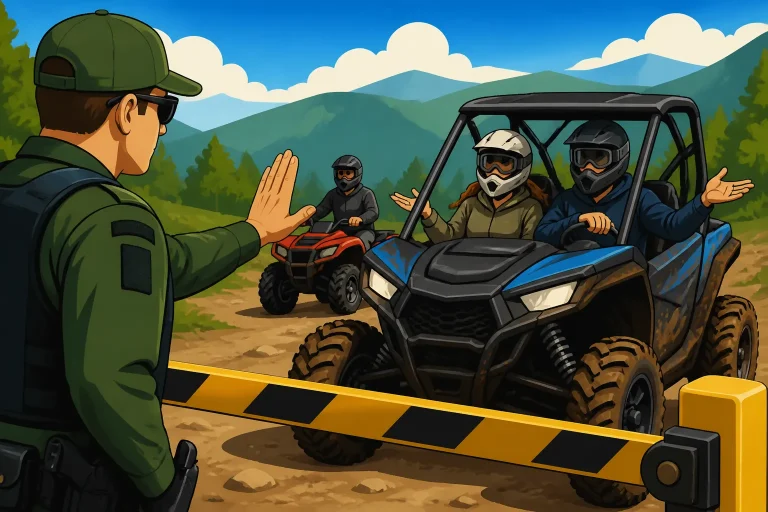
According to the USDA Forest Service, an organized ATV ride on Arkansas national forest land requires a special-use authorization, such as a special-use permit, if it involves 75 or more participants or spectators, or if a participation fee is charged. Either condition is enough to trigger the requirement. The threshold and guidance are stated as of November 2026.
That rule makes it important to define what the event actually is before advertising it. A ride can involve more than the people driving machines: spectators may count toward the attendance threshold. And charging participants can trigger the authorization requirement even if attendance stays below the threshold.
If your plan meets either condition, contact the relevant Forest Service office before setting a date, collecting fees, or promoting the ride. Ask what authorization applies to the activity and what the application process involves. The Forest Service can tell you what information it needs, how it will review the proposed route and event, and whether timing or location affects approval. Do not treat an application as permission to proceed; wait for the agency’s direction and authorization.
Even when your planned attendance is below the threshold and you will not charge a participation fee, contact the land manager if the ride involves organized staging, advertising, a defined route, or other event activities. The threshold identifies circumstances that require authorization; it should not be read as a blanket guarantee that every smaller gathering can use any route or facility without further coordination. The Forest Service is the right place to confirm what applies to your specific plan.
For more context on permits that apply to riding areas, see Arkansas Event Permits for a Ride and Arkansas OHV Permits: Two Forests, Two Prices. An event authorization and a trail-use permit serve different purposes. A permit for an event does not necessarily replace a rider’s required access fee, and an ordinary trail pass does not necessarily authorize you to host a gathering.
Share a clear event plan
When you contact the forest office, be ready to explain the practical shape of the ride. You can make the conversation more useful by describing:
- The proposed date and the number of riders and spectators you expect
- Whether you will collect a participation fee or other event payment
- The forest, trail system, staging area, and route you have in mind
- Whether the event includes check-in, a group start, food, vendors, or other activities
- How participants will learn about route rules and any changes before arrival
These details are planning prompts, not a substitute for the agency’s application instructions. The land manager may ask for different information or require additional steps. Avoid publishing a route or promising access until the responsible office confirms what is available and what approval is needed.
If the event will be promoted publicly, be precise about what is confirmed. State whether riders must arrange their own trail permits, where the ride begins, and whether the route is subject to closure or change. Avoid describing a Forest Service event authorization as a general license to ride anywhere in the forest.
Confirm the land manager, trail and permits
“Arkansas forest land” can refer to places managed by different agencies, and the rules are not interchangeable. Confirm who manages the exact route and staging area rather than relying on a familiar place name or an old event description. The National Park Service oversees regulations within the boundaries of the Buffalo National River, for example, so a route near the river should not be assumed to follow the same process as a national forest trail.
On national forest land, trail access can also differ by system. The USDA Forest Service says that general riding on designated routes in Arkansas national forests usually does not require a special OHV permit, but particular systems in the Ozark-St. Francis National Forests, including Mill Creek and Moccasin Gap, require a day-use fee or permit. That information is as of November 2026. Check the applicable forest’s current directions for the proposed route rather than assuming that a permit for one system covers another.
| Planning question | Why it matters | What to confirm |
|---|---|---|
| Which agency manages the route? | Different agencies may have different rules and authorization processes. | The land manager for the trail, staging area, and any connecting route. |
| Is the route designated for motorized use? | Riding is not allowed everywhere in a forest just because public land surrounds it. | The approved routes and any closures for the event date. |
| Does the trail system require a day-use permit or fee? | Some systems have access requirements even when general forest riding does not. | The system-specific permit, payment, and display instructions. |
| Does the event meet an authorization trigger? | Event size or a participation fee can change what approval is needed. | Whether a special-use authorization is required for the plan. |
| Will any riding use a public road? | Arkansas generally prohibits ATV operation on public streets and highways, subject to specific exceptions. | Whether the route can avoid roads and how any necessary crossing is handled. |
The USDA Forest Service identifies designated motorized trails in the Ouachita National Forest, including the Wolf Pen Gap Trail Complex, as typically open from the first Friday of March through October 31, with additional holiday periods from three days before Thanksgiving through two days after and from December 22 through January 2. Trail conditions, closures, and local directions can affect access, so confirm the current status before making plans around those dates. For trip-planning detail, see Arkansas Trail Conditions Before You Tow and How to Check Wolf Pen Gap Trail Status.
A group ride should stay on routes that are designated and open to the type of vehicle attending. Do not assume a route is suitable for every ATV or side-by-side in the group. Arkansas defines a UTV or side-by-side as 80 inches or less in width, according to the Arkansas Department of Finance and Administration. That definition does not by itself prove that a machine fits a particular gate or is allowed on a specific trail. Confirm any trail-system restrictions with the land manager, and communicate them before riders arrive. Arkansas ATV Trails That Allow Side-by-Sides can help with vehicle-specific planning.
Do not mix forest permits with state registration
Forest access requirements, Arkansas registration, and event authorization are separate questions. The USDA Forest Service says nonresidents generally do not need separate Arkansas OHV registration or a state trail permit to ride designated routes on federal public lands, although rules and entry permits can differ on land managed by another agency. A state-managed wildlife management area, for example, may have requirements that do not apply to a national forest.
That distinction matters for visiting riders. Do not tell out-of-state participants that their home-state sticker automatically satisfies every local access rule. Instead, ask the land manager what is required for the event’s specific location, and direct each rider to confirm any registration or documentation that applies to their machine. See Do Out-of-State Riders Need an Arkansas Registration Decal? for more on the difference between state registration and forest access.
Prepare the route, machines and riders
Good event planning is partly about getting the approval right and partly about avoiding preventable problems on the day. Give participants clear information early enough for them to check their machines, understand access requirements, and decide whether the route suits their experience and equipment.
Check spark arrestors and exhausts
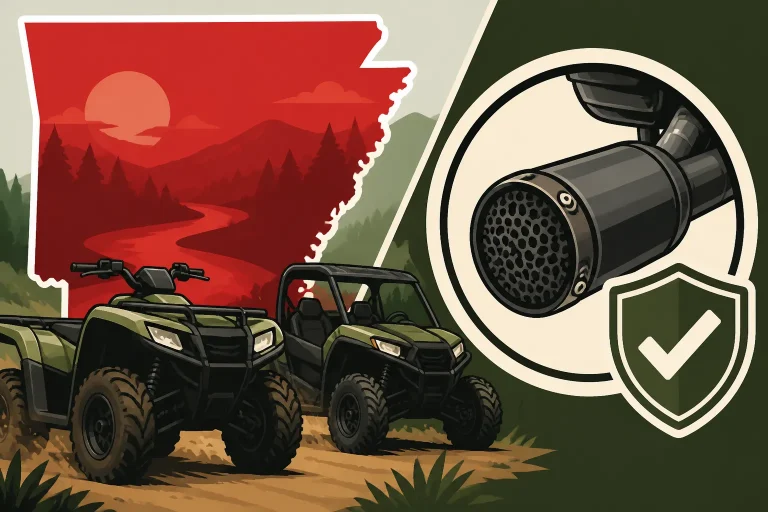
According to the USDA Forest Service, an internal combustion engine on an off-highway vehicle operating in the Ozark-St. Francis National Forests must have a properly installed and maintained spark arrester under federal regulations governing the National Forest System. Arkansas law also prohibits operating an ATV with a modified exhaust or with a removed or modified spark arrester. Some public wildlife management areas enforce “Factory Exhaust Only” rules, according to the Arkansas State Legislature.
Tell riders to inspect their equipment before traveling. A spark arrester is not a substitute for an intact, compliant exhaust system, and a machine that has been modified may not meet the applicable rules. If a rider needs replacement equipment, they should verify that the part is suitable for the machine and complies with the land manager’s requirements. A marketplace such as Amazon may be one place a rider looks for equipment, but the listing alone does not establish that a part is compliant or correctly installed. For a closer look at the equipment rule, see Arkansas Spark Arrestor Requirements and Arkansas Sound Limits on Forest Land.
Set expectations for age and supervision
Rules about supervision can vary by land and agency. Under Arkansas state law, a person must be at least 12 years old to operate an ATV without adult supervision, according to the Arkansas General Assembly. On federal public lands such as Arkansas national forests, the USDA Forest Service requires operators to be at least 16 years old to ride without constant adult supervision.
Make the supervision expectation clear when families register or ask questions. Do not assume a rider who meets the state rule can ride without supervision on a national forest route. Ask the managing agency about any additional restrictions that apply to the location, and make sure the responsible adult understands what supervision means for the group’s route and riding arrangements. Arkansas Rules for Riders Under Twelve provides related state-rule context.
Make the route road-safe
A ride plan should not rely on public roads as convenient links between trail segments. The Arkansas General Assembly says ATV operation on public streets and highways is generally unlawful, with specific exceptions that include farming, hunting, and direct road crossings. Those exceptions do not create general permission to use paved state highways as part of an event route.
Plan a route that stays on designated motorized trails and approved access areas. If a route requires a road crossing, confirm the legal crossing conditions and instructions for that location before the ride. Do not encourage participants to travel between separate trail areas on public roads unless the land manager and applicable law permit the specific movement. For details on road rules, see What Arkansas Law Forbids on a Public Road and Crossing a Highway on an ATV in Arkansas.
Run the event with clear communication
Once you have the land manager’s direction, make the event information match the approved plan. Give participants the location, route, access requirements, equipment expectations, and any limits the agency has identified. If the forest office changes the route or closes an area, update the group rather than relying on riders to discover the change at the trailhead.
At check-in, remind riders to follow posted signs and stay on designated routes. Keep the group organized enough that participants can hear instructions and know where to regroup if the ride is interrupted. A route description should not encourage riders to take unapproved shortcuts, ride around barriers, or continue into a closed section to catch up.
Think through what happens if the planned trail is unavailable. Confirm whether the agency allows an alternate route, and do not substitute a different trail system without checking its rules and access requirements. A change of location may mean a different managing agency, a different permit, or a different authorization process. The event’s approval for one place should not be treated as permission to move it elsewhere.
It is also useful to assign someone to keep the event information consistent. That person can answer participant questions, share updates from the land manager, and make sure nobody interprets a trail pass as approval for the organized event itself. If riders ask what permits they need, distinguish clearly among any event authorization, trail-system access permit, and state registration. Carrying Your Forest Permit at Mill Creek and What a Forest Ranger Checks on an Arkansas Trailhead offer related trail-use context.
The safest planning approach is to confirm the land manager first, describe the event honestly, and get written direction about the route and authorization before inviting people to rely on it. Organized rides can bring riders together, but hosting them on public land carries responsibilities beyond showing up with machines. A clear plan helps the group respect forest rules and reduces the chance that event day turns into a dispute about where riders may go.
Sources
- USDA Forest Service — Wolf Pen Gap – Ouachita National Forest (checked November 2, 2026)
- State of Arkansas Department of Finance and Administration — State of Arkansas Department of Finance and Administration Fiscal Impact Statement HB1606 (checked November 2, 2026)
- National Park Service — Buffalo National River (checked November 2, 2026)
- USDA Forest Service — Special-use Permit Application (checked November 2, 2026)
Disclaimer
This article is for general informational purposes only and does not constitute professional advice. Laws, prices and regulations vary by location and change over time. Consult a qualified professional for guidance on your specific situation.