Snorkels and Creek Crossings
A creek crossing can turn a great Arkansas ride into a costly recovery when water reaches an air intake, electrical connector, or hot engine component. A snorkel can help protect certain intake and drivetrain openings, but it does not make an ATV or UTV waterproof. This guide explains how to assess crossings, prepare your machine, and ride with less risk.
What a snorkel does and does not protect
How ATV and UTV snorkels work
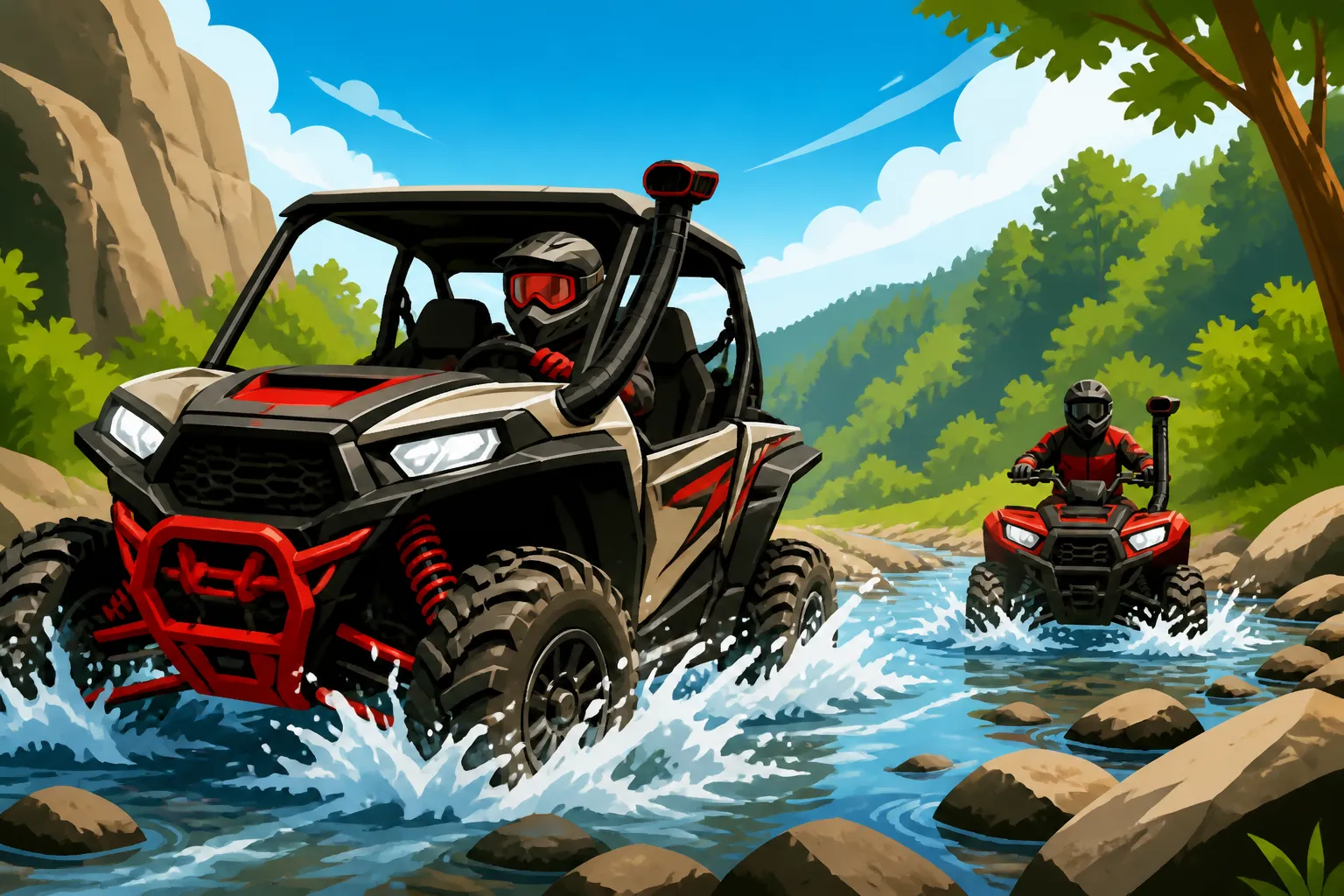
A snorkel raises the openings for systems that may otherwise draw in water when a machine enters a deep crossing. Depending on the machine and the snorkel kit, those openings may include the engine intake, clutch housing ventilation, and differential breathers. Raising them can reduce the chance of water entering through those points when the machine is in water.
That protection is limited. A snorkel does not seal the entire vehicle, and it cannot prevent water from entering through every gasket, electrical connection, vent, or opening. It also does not increase ground clearance, keep water out of the cab, or make it safe to ride through water that is too deep or too fast. Treat “snorkeled” as a description of modified components—not a promise that the machine can handle any crossing.
The machine’s owner’s manual and the snorkel manufacturer’s installation guidance matter. A kit that is suitable for one model may not be suitable for another, and a poorly routed or sealed intake can create problems instead of solving them. If you are considering a kit, confirm which systems it protects and whether installation affects warranty coverage or service requirements.
Why a snorkel is not a substitute for judgment
Water can hide holes, loose rocks, branches, and sudden drop-offs. A crossing that looks shallow from the bank may be deeper in the center, while a clear-looking pool can conceal a soft bottom that traps tires. Current adds another risk: even water that does not look dramatic can push a light machine off its line or make footing dangerous for someone trying to help.
A snorkel also does not prevent damage from water entering through a hot exhaust or contacting hot engine parts. Sudden cooling can stress components, and water in the engine or drivetrain can cause serious problems. If the depth, current, bottom, or exit is uncertain, skipping the crossing is usually the sounder choice than testing the limit of your equipment.
For planning, keep your route expectations realistic. Trail listings and mapping tools such as onX Offroad can help you review an area before you go, but a map cannot tell you the exact depth or condition of a creek at the moment you arrive. Check posted closures and local guidance, and be ready to turn around when conditions are not safe.
How to assess an Arkansas creek crossing
Stop and inspect before entering
Approach slowly and stop well before the water’s edge. Look for posted signs, barriers, and evidence that the crossing is closed or not intended for motorized use. On public land, do not assume that a visible path through the water is an authorized route. The rules for land access and riding areas can differ, so review Arkansas ATV Trails: Where to Ride and Arkansas National Forest Riding Explained for the broader access context.
If the crossing is permitted, inspect it from a safe place on foot. Check the entry and exit, look for a firm route across, and notice whether the water is moving. Do not wade into water that is swift, deep, or otherwise unsafe just to judge it. If you cannot assess the bottom and exit without putting yourself at risk, you do not have enough information to ride through confidently.
Water levels and trail conditions can change after rainfall. A familiar crossing may be very different after a storm, and sediment can cover rocks or wash away parts of a bank. Before heading out, review available trail status information and use a map as a planning aid. onX Offroad may help you orient yourself to a route, but confirm local access rules and current closures through the responsible land manager or trail operator.
Choose a line and set a conservative limit
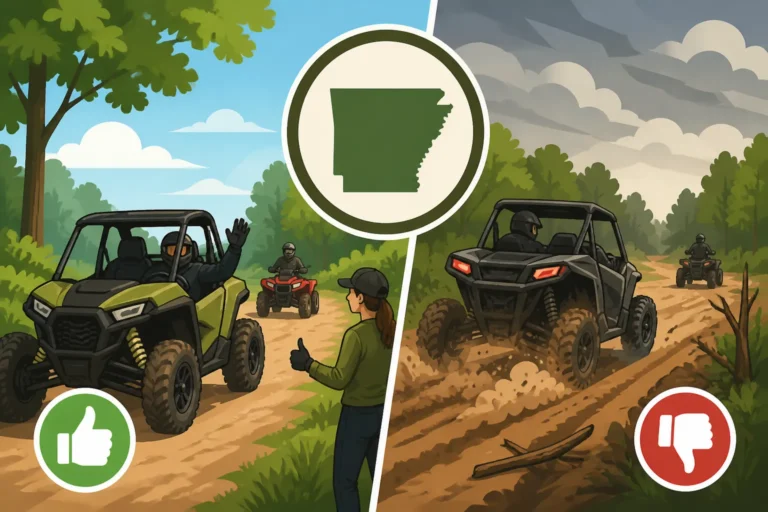
If the crossing is open and appears manageable, identify a single, straightforward line before entering. Avoid sudden turns, abrupt throttle changes, and stopping midstream unless you need to avoid immediate danger. Keep a steady, controlled pace appropriate to the terrain and your machine. The goal is not to create a large bow wave or race the water; aggressive speed can send water toward openings and reduce your control.
Do not follow another rider blindly. Their machine may have different ground clearance, tires, snorkel configuration, or capability, and the bottom may shift after they pass. Give each rider room to assess the crossing independently. If you are riding with a group, agree on a stop-and-check approach before reaching water rather than improvising while several machines crowd the bank.
Set your no-go point before you ride. For example, decide that you will turn around if the water reaches a particular part of the machine, if the current is stronger than expected, or if you cannot see a safe exit. Your owner’s manual may provide operating limits or warnings; do not treat a snorkel installation as permission to exceed them.
| Crossing condition | What to consider | Safer response |
|---|---|---|
| Depth is uncertain | The visible surface may hide a hole or soft bottom | Do not enter until you can assess it safely |
| Water is moving quickly | Current can shift a machine or a person | Turn around and find another authorized route |
| The exit is steep, muddy, or blocked | A machine may lose traction or become stuck | Choose another route rather than forcing the climb |
| The trail is posted closed | The route may be unsafe or restricted | Obey the closure and do not bypass barriers |
| Water has risen after rain | A familiar crossing may have changed | Recheck conditions or turn back |
Preparing the machine and riding group
Inspect the machine before and after a crossing
Before a ride, check the machine’s air intake and snorkel connections for loose clamps, cracks, or missing seals. Inspect exposed electrical connectors and make sure required covers are in place. If the machine has a snorkel kit, follow its maintenance instructions; modifications need periodic checks, especially after rough rides or service work.
Pay attention to the tires, brakes, lights, and controls too. A crossing can leave mud and debris around moving parts, while water may affect braking response temporarily. Do not assume that a machine is ready for the next crossing simply because it made it through the first one. Allow the brakes to dry and test them gently in a safe area before continuing.
After a water exposure that seems deeper than expected, follow the owner’s manual and seek qualified service if you notice unusual engine behavior, warning lights, slipping, grinding, or other changes. Do not keep riding to “see if it clears.” Water in an engine or drivetrain can create damage that worsens with continued operation. A basic post-ride inspection is also useful after ordinary crossings, particularly if the machine has been submerged near its vents or intake.
Coordinate the group and carry recovery basics
Before entering a crossing, make sure the group knows who is going first, where everyone should wait, and what to do if a machine gets stuck. Keep spectators and waiting riders away from the water’s edge. A person standing beside a moving machine or in a current can be injured quickly, and crowding makes it harder to respond calmly.
Carry a communication method that works for your group and location. Cell coverage can be limited in forested or mountainous areas, so do not make a phone your only plan. A tow strap and suitable recovery points can help with a controlled recovery, but never attach a strap to a part of the machine that is not designed for towing. Keep people clear of tensioned straps, and avoid recovery attempts in water or on unstable banks when the risk is greater than the benefit.
Know when to stop. If a machine stalls in water, do not repeatedly crank it without understanding the cause; if water has entered the engine, restarting may worsen the damage. Keep riders out of hazardous water and get help from someone equipped to recover the machine safely. For more general trail preparation, see Carrying a Tow Strap in the Hills, First Aid Worth Carrying on a Long Loop, and Arkansas Trail Conditions Before You Tow.
Responsible creek crossing and route planning
Protect the trail, creek, and other riders
Stay on the authorized route and use designated crossings. Riding around a muddy or wet section can widen the trail, damage vegetation, and create new ruts that may lead to erosion. Do not cut a new path along the bank to look for an easier entry. If a crossing appears damaged or unsafe, turn around and report the issue to the appropriate trail operator or land manager when practical.
Avoid spinning tires in the water or on the bank. Wheel spin can churn sediment, damage the trail, and leave a hole for the next rider. A careful, controlled attempt is better than repeated aggressive tries—but if the machine is not moving forward safely, stop and reassess rather than digging deeper. Leave the crossing as you would hope to find it: passable, undamaged, and free of trash.
Be considerate of people using the area for other activities. A creek may be near a campsite, fishing spot, or shared recreation area. Slow down near people, keep noise reasonable, and give others space. For practical guidance on trail conduct, Arkansas Trail Etiquette Locals Expect is a useful companion read.
Plan for changing conditions and a safe turnaround
Build flexibility into your route. If rain is forecast or has recently fallen, expect creek levels and trail surfaces to change. Check the land manager’s notices before leaving and again when possible at the trailhead. A route planned with onX Offroad or another mapping tool should include a realistic turnaround option, not just a preferred destination. Maps help with orientation; signs, closures, and conditions on the ground determine what is safe and allowed.
Let someone outside the riding group know where you plan to ride and when you expect to return. Carry water, basic first aid, and the supplies appropriate to the length and remoteness of the trip. If a crossing is not clearly manageable, choose a safer route or end the ride early. That can feel frustrating when you have driven a long way or planned around a particular trail, but a missed crossing is far less costly than an injured rider or damaged machine.
A snorkel can be one part of preparing an ATV or UTV for wet conditions, but the safest approach is still to inspect each crossing, follow local restrictions, and turn back when the conditions exceed what you can confidently assess. Review Arkansas Trail Closures After a Storm before a wet-weather ride, and use Arkansas ATV Trails With Creek Crossings as a starting point for route research—not as a guarantee that any specific crossing will be safe on the day you arrive.
Disclaimer
This article is for general informational purposes only and does not constitute professional advice. Laws, prices and regulations vary by location and change over time. Consult a qualified professional for guidance on your specific situation.