Youth Training at an Arkansas Trail Park
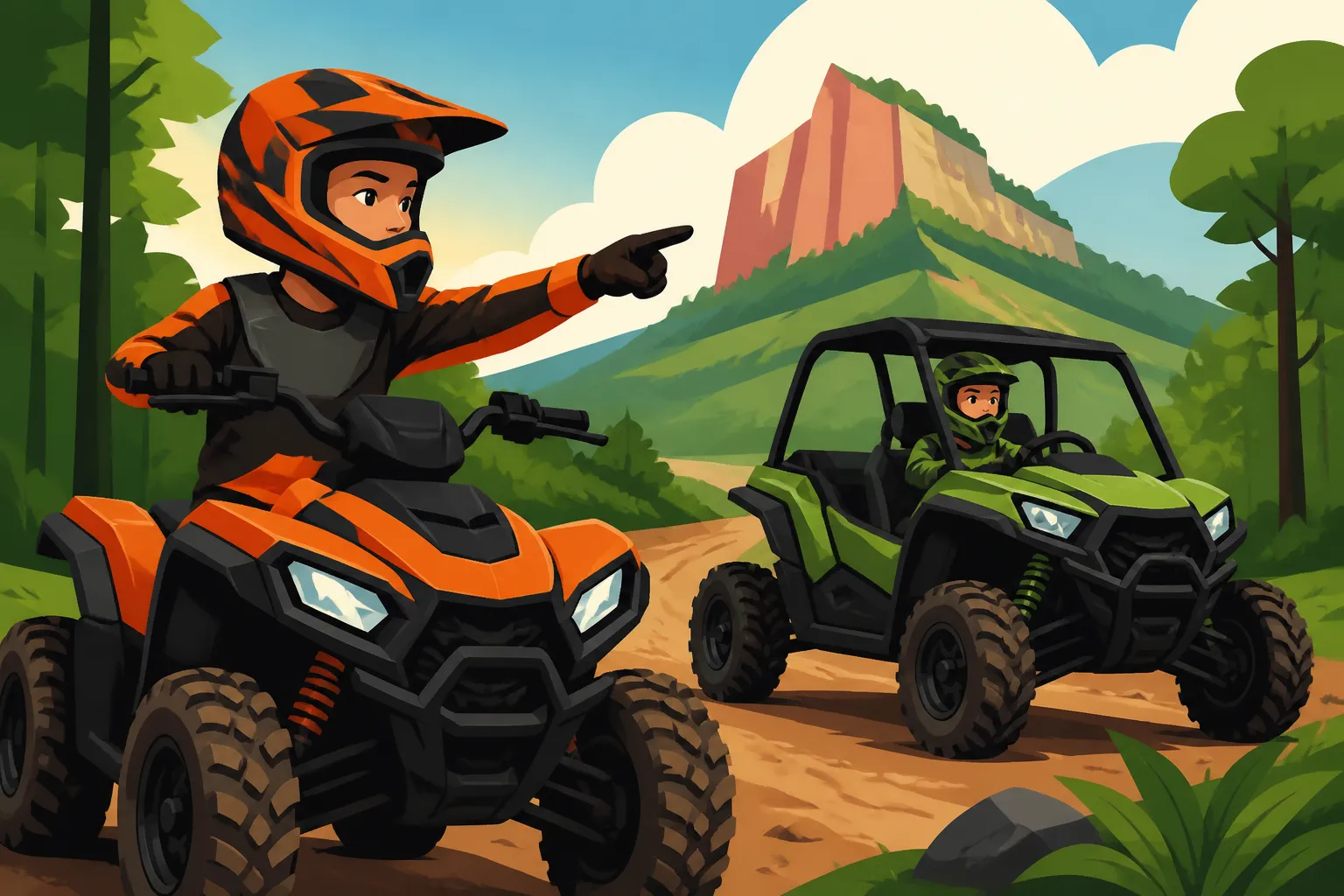
A young rider may be eager to get on the trail, but enthusiasm is not the same as readiness. Arkansas families need to sort out what training is required, what a park allows, and how to choose a manageable first ride. The safest plan is to confirm the park’s youth rules in advance, practice basic controls on easy ground, and keep supervision close.
What youth training means at an Arkansas trail park
Arkansas does not require every ATV rider to complete a statewide safety course before riding. That does not mean training is unnecessary, or that every trail park has the same entry rules. A private park can set its own age limits, supervision requirements, orientation process, equipment rules, and waiver terms. Public riding areas have their own access and permit requirements.
It helps to separate three things that are often treated as if they were interchangeable:
| What you are checking | What it addresses | What to confirm |
|---|---|---|
| Safety training | Whether a young rider can control the machine and make sound decisions | Whether the park offers instruction, an orientation, or a skills check |
| Park admission rules | Whether the rider and machine may enter | Minimum age, supervision, helmet, waiver, and passenger rules |
| Trail or land-use permit | Whether the machine has the required access authorization | Which permit applies, where it is valid, and whether it is needed for each machine |
A course, orientation, or practice session can build skills, but it does not automatically satisfy a park’s rules or provide access to public land. In the same way, buying a permit does not demonstrate that a child is ready to ride. For an overview of the statewide course requirement, see Arkansas Has No Mandatory ATV Safety Course.
Before booking, contact the specific park and ask what it means by “training.” It might offer a guided introduction, a short safety briefing, beginner instruction, or no instruction at all. Do not assume that a ride described as beginner-friendly includes one-on-one coaching. Ask whether the instructor works with children, whether a parent must attend, and what happens if the young rider is not comfortable once the session begins.
A useful youth session should cover more than starting and stopping. Depending on the machine and terrain, a young rider may need to practice:
- Identifying the throttle, brakes, ignition, and shutoff control
- Starting, stopping, and keeping a steady, manageable speed
- Turning without cutting across another rider’s path
- Braking on a gentle slope and handling loose ground
- Stopping safely when asked, including on a trail
- Leaving space between machines and watching for riders ahead
- Responding to changing trail conditions and adult instructions
The goal is not to prove that a child can finish a difficult loop. It is to see whether they can control the machine calmly and follow directions before the family moves on to more demanding riding.
Confirm age, supervision, and park rules before you go
Arkansas rules for children and private-park policies are separate questions. A child can meet a general legal condition and still be too young for a particular park, machine, tour, or trail. Likewise, a park’s age limit does not tell you what state rules apply. Check both.
For children under twelve, pay particular attention to the state supervision requirement and what “direct supervision” means in the riding situation. Arkansas Rules for Riders Under Twelve explains the age-related issue, while Direct Supervision by an Adult and Why the Supervising Adult Must Be Eighteen or Older help clarify who must supervise and how closely. Do not assume that an adult standing somewhere at the trailhead counts as supervision during a ride. Confirm the rule and the park’s interpretation before the child rides.
Then ask the park about its own policies. Useful questions include:
- What is the minimum age to operate each type of machine?
- Does the minimum change for a guided ride or a training session?
- Must a parent or guardian ride alongside the child, or can staff supervise?
- Are there restrictions based on the child’s size, experience, or ability to reach the controls?
- Can a child ride as a passenger, and under what conditions?
- Does the park require a parent or guardian to complete paperwork in person?
- Are there areas or trails that are off limits to young riders?
- What happens if staff decide that a rider or machine is not suitable for the planned trail?
Policies can differ between parks and may change. A phone call or current written rules from the operator are more dependable than an old social media post or a friend’s memory. If a park requires a waiver, ask how it handles minors and who must sign. Arkansas Private Park Waiver Forms offers more detail on that paperwork. A waiver is not training, and signing one does not remove the need to follow the park’s instructions.
Be equally clear about helmets and other protective gear. Ask whether the park requires a helmet, what type it accepts, and whether it supplies one in a suitable size. Park requirements and good safety practice are not always identical. Even when a rule is unclear, a properly fitted helmet is a sensible baseline for off-road riding. See Arkansas Private Park Helmet Rules for the park-policy side of the question.
Choose a machine and trail the child can manage
The right first ride is usually less demanding than the most exciting ride in the family group. A youth rider needs to reach and operate the controls comfortably, understand how the machine responds, and remain focused for the length of the ride. Do not judge suitability by age alone: build, coordination, experience, machine design, terrain, and conditions all matter.
Start with the park’s recommendations for the specific machine. If the family brings its own ATV or UTV, describe the machine accurately and ask whether it is allowed in the beginner area. If the park rents equipment, confirm which machines a young rider may operate and whether the park offers a size-appropriate option. A young person should not be placed on a machine simply because it is available or because an older rider uses it successfully.
Before riding, check that the child can:
- Sit in a stable position and reach the controls without stretching or shifting dangerously
- Understand which control slows or stops the machine
- Operate the controls without confusion
- Follow a simple direction such as stop, wait, or pull over
- Keep attention on the trail rather than competing with other riders
- Say when they feel unsure, tired, or overwhelmed
If any of these are uncertain, pause and ask the park about a lower-pressure introduction. A smaller practice area, an instructor-led session, or another visit without trail riding may be the better choice. Pressuring a nervous child to keep up can make a manageable learning curve risky.
Choose terrain deliberately. Ask staff which route is genuinely appropriate for a first-time young rider, not merely which route is labeled “easy.” Trail ratings are useful, but they cannot account for every child, machine, or day’s conditions. Arkansas Trail Ratings and What They Mean can help families think about difficulty, while the park can explain current conditions, steep sections, loose rock, water crossings, traffic, and any other features that matter locally.
A simple progression is more useful than a long first ride:
- Practice in a controlled area. Begin with the machine stationary, then practice starting, stopping, and turning where there is room and little traffic.
- Add one skill at a time. Move to gentle curves or mild changes in surface only when the child can control the machine consistently.
- Take a short, easy route. Ride at the young rider’s pace, with an adult positioned to monitor them and help without blocking other trail users.
- Stop before fatigue sets in. Tired riders can become less attentive and less able to respond. A short successful ride is a better first outing than a long one that ends in frustration.
- Review what went well. Ask what felt comfortable and what did not before deciding whether to repeat the same route or try another.
A family group should not let its least experienced rider be pulled along at the speed or distance preferred by more experienced adults. If the group cannot stay together at the child’s safe pace, split up or choose a different activity.
Sort out permits, preparation, and the ride-day plan
Training and access permits solve different problems. A private trail park may use its own admission process, while a public trail system may require a land-use permit. Requirements depend on where you ride; a permit for one area should not be assumed to work at another. Arkansas riders may need to consider separate forest permits when using different public riding areas, as explained in Arkansas Riders Need Two Different Forest Passes. Confirm the current rules for the exact trail system and machine before traveling.
Ask the park or land manager whether permits are required for the machine, whether proof must be displayed or carried, and whether the rules differ for visitors from out of state. Do not assume that a child needs a separate permit—or that a family’s existing pass covers every machine—without checking the applicable terms. More broadly, Do Out-of-State Riders Need an Arkansas Registration Decal? addresses a separate registration question that should not be confused with trail access. Registration, a trail permit, and a park admission charge are not necessarily the same thing.
Plan the basics before you leave home:
- Confirm the session and arrival time. Find out whether the child needs to arrive early for instruction, a briefing, paperwork, or a machine check.
- Check equipment requirements. Ask about helmets, eye protection, gloves, footwear, and any required clothing. If purchasing gear through a retailer such as Amazon, match the item to the park’s specifications and check sizing carefully rather than choosing by appearance.
- Bring required documents. Ask what identification, proof of permission, registration information, or signed forms are needed for the adult and machine.
- Pack water and weather-appropriate layers. A young rider may tire faster than expected, especially in heat, rain, or dusty conditions.
- Agree on a stop signal and meeting plan. The child should know how to get an adult’s attention and what to do if the group becomes separated.
- Set expectations. Explain that stopping, waiting, or returning to the staging area is part of the plan—not a punishment.
At the park, listen to the orientation even if the family has ridden elsewhere. The trail layout, signs, traffic direction, closures, and local hazards may be different. Review Arkansas Trail Etiquette Locals Expect for general shared-trail habits, then follow the specific instructions given at the riding area.
During the ride, an adult should stay focused on the child rather than treating the outing as an opportunity for their own fast ride. Keep the young rider within easy view, use a pace that leaves room to stop, and avoid crowding them from behind. If the child makes repeated control mistakes, stops responding to instructions, or looks anxious or exhausted, end the riding portion and reassess. A safe, positive first visit is a better foundation than pushing through a route the child is not ready to handle.
Disclaimer
This article is for general informational purposes only and does not constitute professional advice. Laws, prices and regulations vary by location and change over time. Consult a qualified professional for guidance on your specific situation.